

Duplex and ADU Investing in Hialeah and Little Havana
Updated September 2026
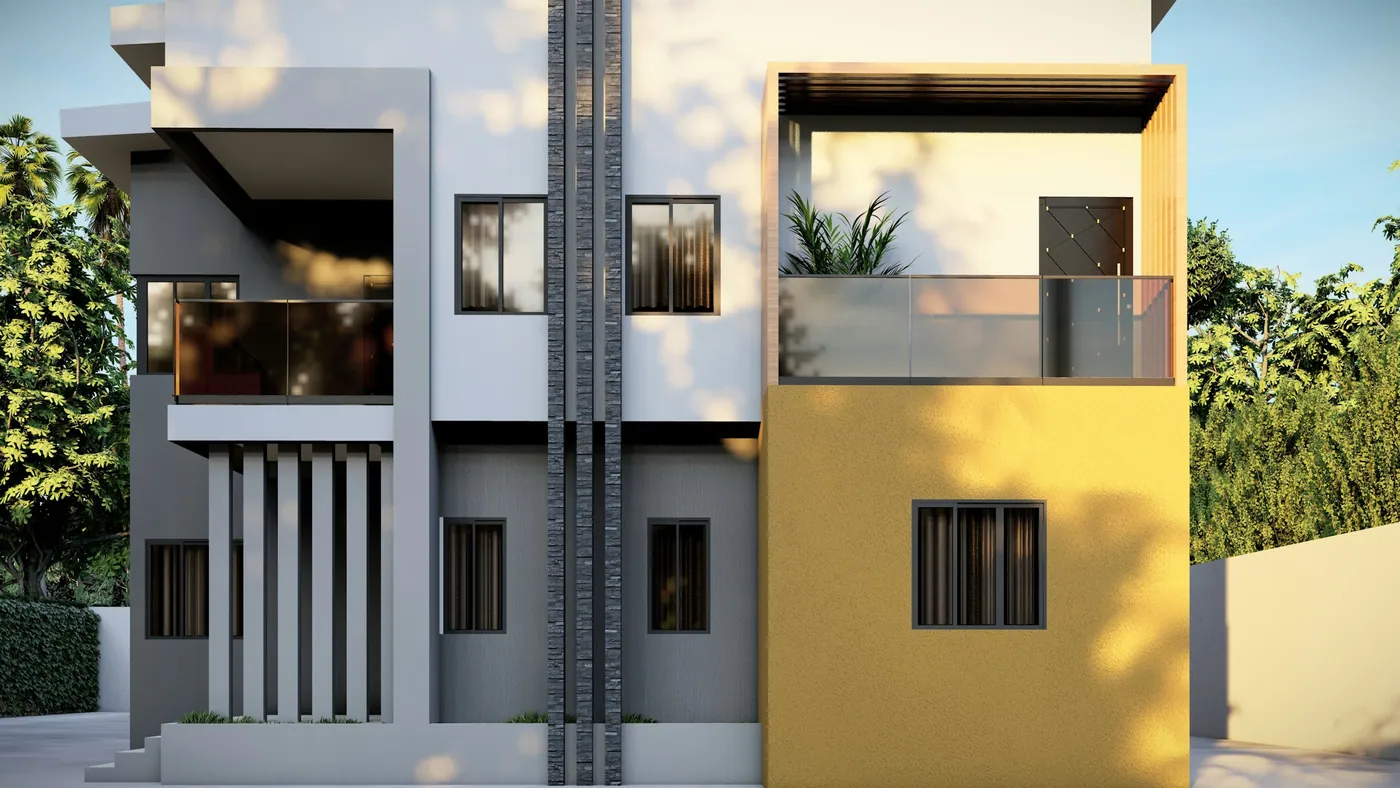
The oldest investment strategy in Miami-Dade is also the simplest: live in one unit, rent the other, let the tenant carry part of the mortgage. In Hialeah and Little Havana that has meant duplexes for decades, and, more recently, the backyard or garage unit the county now calls an accessory dwelling unit. The idea is good. The details decide whether it works.
Two ways to house-hack
A duplex is one building, two legal units, one lot. Lenders treat it as a two-unit residential property, and the second unit’s rent can help you qualify.
An accessory dwelling unit (ADU) is a smaller second unit, attached or detached, on the lot of a single-family house. It has its own kitchen, bathroom and sleeping area. Whether you can build one, or legally rent the one that is already there, depends on which government’s zoning code covers the lot.
What Miami-Dade County allows, and where
In November 2022 the county commission approved an ordinance allowing one ADU or guesthouse per lot on single-family properties in unincorporated Miami-Dade. The first permits were under review by June 2023, and the county estimated roughly 171,683 single-family properties became eligible. The county’s own ADU page sets the terms:
- One accessory unit per lot in the AU, EU and RU zoning districts inside the Urban Development Boundary.
- Minimum lot of 7,500 square feet (garage conversions were allowed on lots down to 5,000 square feet).
- Between 400 and 800 square feet of habitable area in RU-1 districts.
- A maximum of one additional parking space, on the property or the adjacent swale.
- The owner does not have to live on site but cannot live in the ADU.
- The ADU can be rented for a fee; the county says doing so “shall not constitute an unlawful duplex.” It cannot be a vacation rental on its own, and the county reported a one-month minimum rental term when the ordinance passed.
- Every ADU needs a Certificate of Use after completion and before occupancy, obtained only by the owner and renewed annually.
The important word is unincorporated. The county ordinance does not reach into cities. Hialeah has its own zoning code, and Little Havana sits inside the City of Miami, which has its own.
City of Miami: Miami 21
Under the Miami 21 code, ADUs have been allowed in the T3-L transect zone. A proposed expansion to T3-R (single-family only) and T3-O (single-family and duplex) passed first reading at the City Commission in February 2025, with a second reading scheduled for April 24, 2025. As reported at the time, the proposal capped the ADU footprint at 10% of the lot (about 500 square feet on a typical 50-by-100 lot) with a maximum of 800 square feet, limited height to the primary residence, required one parking space outside transit corridors, required the house and ADU to stay under the same ownership, and allowed renting the ADU only when the primary residence is owner-occupied with a homestead exemption. We could not confirm the final adoption from a City source while writing this post, so check the current text with City of Miami Planning before you count on an ADU on a Little Havana lot.
Hialeah is a separate municipality with its own code and its own permitting office. Confirm the zoning district, lot minimum and any owner-occupancy rule with Hialeah Planning and Zoning before you write an offer that depends on a second unit.
Legal unit, or illegal efficiency
Every investor who has toured Hialeah or Little Havana has seen the “efficiency”: a converted garage, a walled-off Florida room, a back unit with its own door and no permit. Some are older than the current owner. That does not make them legal, and it does not make their rent count.
A legal second unit has a building permit, a final inspection and, for a county ADU, a current Certificate of Use. An illegal one has none of those. The practical consequences are the ones that hit your numbers: the appraiser will not treat unpermitted space as a unit, the lender will not count its rent, the insurer may exclude it or decline the property, and code enforcement can order it removed. If a listing’s rent roll leans on an efficiency, underwrite the deal without it and treat any rent it produces as a bonus you may lose.
FHA on two to four units
FHA will insure a loan on a two-, three- or four-unit property when the borrower lives in one of the units as a primary residence. That is what makes the strategy work with a small down payment. The rules to know:
- Rental income counts in qualifying, at a discount. For the subject property, the lender uses the appraiser’s fair market rent from the Small Residential Income Property Appraisal Report (Fannie Mae Form 1025), or the actual lease, and counts 75% of it. Not 100%.
- Three- and four-unit properties must pass a self-sufficiency test. The property’s discounted rent, including the unit you will occupy, has to cover the full mortgage payment. Duplexes are exempt. Lenders also require reserves on three- and four-unit properties.
- The unit must be legal. The appraiser reports what is permitted. An unpermitted efficiency does not become a third unit because it has a stove.
For the FHA versus conventional decision on a small multifamily, read our FHA vs conventional guide, and run the real payment, with the discounted rent, through the affordability tool.
What the lender and the appraiser will ask for
Expect requests for the leases, a rent roll, the last twelve months of collections if the seller has them, the permit history, the Certificate of Use where one applies, a current insurance quote on the whole building, and a wind mitigation and four-point inspection if the structure is older. The appraiser on a two- to four-unit property will complete a rent comparison and an operating income statement in addition to the sales comparison. If the second unit is not on the permit record, expect the appraisal to say so.
Where this works
It works where the duplex or ADU is legal, the rent is real, the building is insurable and the taxes are run at your purchase price rather than the seller’s. Hialeah and Little Havana have plenty of properties that meet all four tests, and plenty that fail the first one. The difference is a permit search and a walk with an inspector, both of which cost far less than finding out later.
Sources
- Miami-Dade County, Accessory Dwelling Unit (ADU): https://www.miamidade.gov/global/economy/building/accessory-dwelling-unit-adu.page
- Miami-Dade County, ADU Blueprint for Homeowners: https://www.miamidade.gov/global/economy/building/accessory-dwelling-unit-blueprint-for-homeowners.page
- National Association of Counties, “Miami-Dade County’s ADU rules aim to help many find, keep housing” (July 5, 2023): https://www.naco.org/articles/miami-dade-county-adu-rules-aim-help-many-find-keep-housing
- Miami Today, “In housing crisis, accessory dwellings use is expanded” (November 1, 2022): https://www.miamitodaynews.com/breaking/in-housing-crisis-accessory-dwellings-use-is-expanded/
- Coconut Grove Spotlight, “Miami Eyes ADUs as Housing Solution” (April 21, 2025): https://coconutgrovespotlight.com/2025/04/21/miami-eyes-adus-as-housing-solution/
- ADU Zoning, Miami FL rules summary (last verified July 1, 2026): https://www.aduzoning.org/adu-rules/miami-fl/
- Mortgage Research Center, “FHA Rental Income Guidelines 2026” (March 1, 2026): https://www.mortgageresearch.com/articles/fha-rental-income-guidelines/
- Miami-Dade County, Short-Term Vacation Rentals: https://www.miamidade.gov/global/economy/neighborhood-compliance/residential-short-term-vacation-rentals.page
Frequently asked
Can I build an ADU in Miami-Dade County?
On single-family lots in the AU, EU and RU zoning districts inside the Urban Development Boundary in unincorporated Miami-Dade, yes: one accessory unit per lot, a minimum lot of 7,500 square feet (garage conversions down to 5,000), 400 to 800 square feet of habitable area in RU-1, at most one added parking space, and a Certificate of Use obtained by the owner and renewed annually. Hialeah and the City of Miami are separate municipalities with their own codes — confirm with their planning offices before an offer depends on a second unit.
Does rental income from a duplex count toward an FHA loan?
Yes, at a discount. For the subject property the lender uses the appraiser's fair market rent from the Small Residential Income Property Appraisal Report (Fannie Mae Form 1025), or the actual lease, and counts 75% of it. The unit has to be legal — an unpermitted efficiency does not become a unit because it has a stove.
How do I know if a second unit is legal?
A legal unit has a building permit, a final inspection and, for a county ADU, a current Certificate of Use. Pull the permit history on the county or city portal, ask for the Certificate of Use if the lot is in unincorporated Miami-Dade, and walk the unit with your inspector. If the seller's answer is "everyone rents them," that is the answer.
Can I rent a Miami-Dade ADU as a vacation rental?
Not on its own. The county allows an ADU to be rented for a fee — its page says doing so "shall not constitute an unlawful duplex" — but it cannot be a vacation rental by itself, and the county reported a one-month minimum rental term when the ordinance passed. The owner does not have to live on site but cannot live in the ADU.