

Commercial Real Estate in Miami: offices, retail, warehouse and mixed-use
Offices, retail bays, warehouse and light-industrial space, mixed-use buildings and the land under them, bought, sold and leased across Miami-Dade and Broward. Rent rolls and leases in place read before an offer, zoning and permitted use confirmed rather than assumed, and the county’s own transfer tax budgeted at the letter of intent instead of discovered at closing. For owner-users, landlords, tenants and investors, in English or Español.
Updated October 2026
How a commercial purchase or lease works here, step by step
- 01
The use comes before the listing
What the business has to do in the space: square footage, clear height, power, loading, parking ratio, hours, signage — and whether that use is permitted where you are looking. Narrow on the use and the shortlist writes itself.
- 02
Representation and fee, in writing
Commercial brokerage is negotiated, not standardised: scope, term, fee and which side pays are agreed before the work starts. Florida also requires a broker to disclose its statutory commission-lien rights at or before you sign, so that language is on the face of ours.
- 03
Underwrite before you tour
Rent roll, leases in place, expense history, insurance, and the tax bill as it will be assessed after a sale rather than as the seller pays it now. A building that shows well and underwrites badly is still a bad buy.
- 04
Confirm what the zoning allows
The listing describes what the building is. Zoning and the certificate of use decide what it may be. We confirm permitted use, parking and any variance or conditional approval the current owner is relying on, which does not always travel with the property.
- 05
Letter of intent, then contract
Commercial deals open with a non-binding letter of intent setting price, deposit, due-diligence window and closing date. Getting it right costs a week and saves you negotiating the same points twice.
- 06
Due diligence with the clock running
Title and survey, an estoppel from every tenant, environmental, the building recertification status, and whether the permits on file were ever closed. The window is the one you negotiated, so we work it from day one rather than day twenty.
- 07
Close, then hand the building over
Prorations, security deposits transferred, tenant notice letters, utilities and the certificate of use moved into the new name. If management is staying with us, nothing about that day is a handover at all.
What a commercial purchase costs in Miami-Dade
Miami-Dade is the only county in Florida that writes its own deed rate, and the difference falls almost entirely on commercial property. The documentary stamp tax here is 60 cents per $100 rather than the statewide 70, but the county adds a 45-cent discretionary surtax — and that surtax is waived only when the document transfers a single-family residence. An office building, a retail bay, a warehouse or a parcel of land therefore transfers at $1.05 per $100, half again what the same deal costs in Broward or anywhere else in the state.
On a $2,000,000 building that is $21,000 against $14,000. It is not a closing-table surprise if it is in the letter of intent, which is the only place the question of who pays it is genuinely open.
| Item | Typical amount | Who pays |
|---|---|---|
| Documentary stamp tax on the deed (Miami-Dade rate) | $0.60 per $100 of the consideration | Seller (county custom; negotiable) |
| Discretionary surtax on the deed — anything other than a single-family residence | $0.45 per $100 of the consideration | Seller (county custom; negotiable) |
| Documentary stamp tax on the note (financed purchases) | $0.35 per $100, capped at $2,450 | Buyer |
| Intangible tax on the mortgage | 0.2% of the loan amount | Buyer |
| Owner's title insurance policy | Florida promulgated rate, by sale price | By county custom; negotiable |
| Sales tax on commercial rent | Repealed for rental periods beginning on or after 1 October 2025 | Was the tenant; no longer due |
| Building recertification | Engineer or architect report at 30 years inland, 25 coastal, then every 10 years | Owner |
Miami-Dade is the only Florida county with its own deed rate, so a commercial transfer here runs $1.05 per $100 against 70 cents statewide. Surtax exemption: F.S. 201.031(1). Note rate and $2,450 cap: Florida Dept. of Revenue. Rent tax repeal: Florida Dept. of Revenue TIP 25A01-04, issued 24 July 2025. Recertification ages: Miami-Dade County Code §8-11(f). Intangible tax: F.S. 199.133. · Florida Dept. of Revenue — documentary stamp tax
“except that there shall be no surtax on any document pursuant to which the interest granted, assigned, transferred, or conveyed involves only a single-family residence”
Leasing in Florida now the rent tax is gone
For more than fifty years Florida was the only state that charged sales tax on commercial rent. That ended on 1 October 2025: the tax under section 212.031 is repealed for rental periods beginning on or after that date, and the county surtax on rent went with it. Rent for periods through September 2025 is still taxable even if it was paid later, which is the one trap left in the transition.
What the repeal did not do is change the work. Base rent, common-area maintenance, insurance and property taxes are still passed through, still negotiated, and still the thing that decides whether a quoted rate is cheap. Plenty of leases drafted before the repeal still read “plus applicable sales tax” — the clause is harmless now, and worth striking at renewal rather than arguing about later.
Zoning, permitted use and the certificate of use
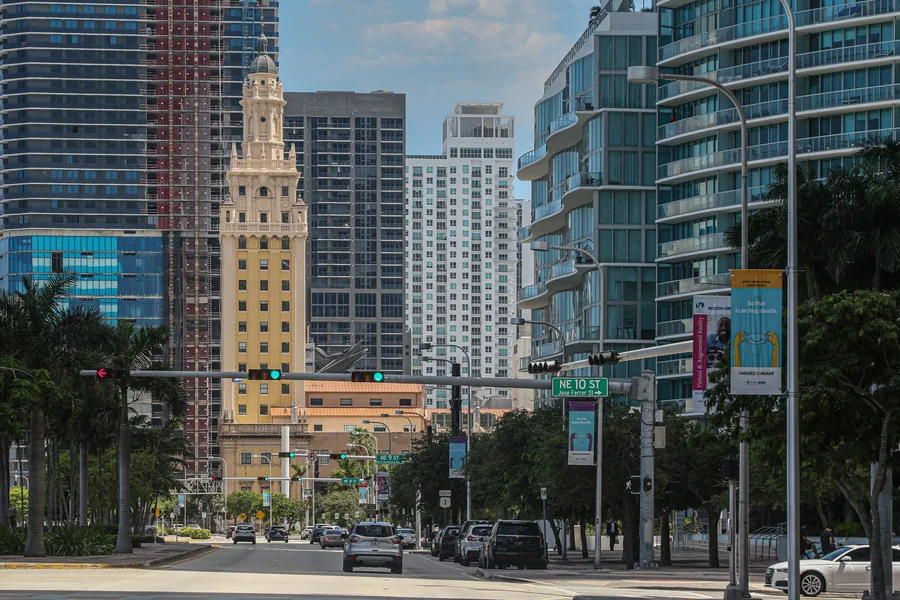
Miami-Dade is not one jurisdiction. The county zones the unincorporated areas, the City of Miami runs its own form-based code, and more than thirty municipalities in between write their own. A use permitted outright on one side of a street can be a conditional approval on the other, and the certificate of use — the local permission for your specific business to operate in that specific space — is issued by the city, not the county, and does not come with the building.
So the question is never only what the building is. It is what it is allowed to be, who allows it, what parking the use requires, what signage the code permits, and whether the seller is operating on a variance that will not survive the sale. We confirm that in writing before the due-diligence window closes, because by then it is no longer a question you can ask for free.
Due diligence: what to check before the window closes
Recertification is the item that most often moves a price. Miami-Dade requires a building to be recertified by an engineer or architect at 30 years of age — 25 if it is coastal — and every ten years after that. Single-family homes, duplexes and minor structures are excepted; offices, retail, warehouses and mixed-use are not. An open recertification is a repair bill with a statutory deadline attached, and it belongs in the negotiation rather than in your first year of ownership.
Alongside it: a Phase I environmental site assessment on anything that has held a tenant with a tank, a press, a paint line or a dry cleaner; the roof age and wind-mitigation report, which set the insurance that sets the net; an estoppel from every tenant confirming what they actually believe their lease says; and a permit search, because an open permit from a previous owner becomes yours at closing.
Questions commercial buyers and tenants ask
Do you still pay sales tax on commercial rent in Florida?
No. For rental periods beginning on or after 1 October 2025 the state sales tax on commercial rent is repealed, and the discretionary county surtax on rent goes with it. Rent covering periods through September 2025 is still taxable even if it was paid afterwards. Many leases drafted before the repeal still say “plus applicable sales tax”; the clause is now inert, and the place to remove it is the renewal.
How much is the transfer tax on a commercial property in Miami-Dade?
$1.05 per $100 of the consideration — 60 cents of documentary stamp tax plus the county’s 45-cent discretionary surtax, because the surtax is waived only when the document transfers a single-family residence. The rest of Florida pays 70 cents. On a $2,000,000 building that is $21,000 here against $14,000 elsewhere, which is why it belongs in the letter of intent rather than the closing statement.
Does a commercial building need the 40-year recertification?
Yes, once it is old enough, and sooner than the name suggests. Miami-Dade requires recertification at 30 years for inland buildings and 25 for coastal ones, then every ten years. Only single-family homes, duplexes and minor structures — an occupant load of ten or fewer and 2,000 square feet or less — are excepted, so offices, retail, warehouses and mixed-use are all in scope.
Does the seller have to disclose problems with a commercial property?
Far less than with a house. Florida’s statutory disclosure duty is built around residential property and its definition stops at four units, or ten acres of agricultural land. Above that line you are protected by the due-diligence period, the survey, the tenant estoppels and the environmental report — not by a disclosure form.
How is a commercial agent paid?
By negotiation, in writing, before any work starts: a percentage of the price, a flat fee, or a per-square-foot figure on a lease, paid by whichever side the agreement names. Florida also gives a commercial broker a statutory lien for a commission it has earned, and requires the broker to disclose that right at or before the agreement is signed — so it is stated plainly in ours rather than buried.
How long does a commercial purchase take to close?
Longer than a house, and most of the time is due diligence rather than lending. A 30- to 60-day inspection window followed by a 30-day close is common; an environmental finding, estoppels from a dozen tenants or an unclosed permit will extend it. The timetable is set in the letter of intent, which is why that document is worth a week of attention.
Tell us what the space has to do.
Use, square footage, budget and where. We will tell you what is realistic before you spend a morning touring.