

Luxury and Waterfront Homes in Miami: estates, high-floor condominiums and the checks that cost the most
Waterfront estates, gated-community houses and high-floor condominiums across Miami-Dade and Broward, handled discreetly and bilingually. Insurance priced before the house rather than after it, the elevation and the seawall read as numbers rather than views, the association’s structural and reserve position examined in a high-rise, and the two taxes on a large mortgage that behave very differently from one another. In English or Español.
Updated October 2026
How a luxury purchase works here, step by step
- 01
Decide what the water is for
Ocean, bay, canal or lake are four different purchases with four different risk profiles, insurance costs and resale markets. A deep-water dock with ocean access and no fixed bridge is a specification, not a preference, and it narrows the search faster than any price filter.
- 02
Representation and fee, in writing
Scope, term, fee and which side pays, agreed before the search begins. Florida requires a broker to disclose its statutory commission-lien rights at or before you sign, and that is on the face of our agreement. Confidentiality expectations are agreed at the same time rather than assumed.
- 03
Price the insurance before you price the house
At this level insurance is not a closing line, it is a carrying cost that can move the economics of the whole purchase — and the state-backed insurer is simply not available above a certain replacement cost in this county. Get indications early, on the specific address, before the offer rather than during the inspection period.
- 04
Pull the elevation certificate and the flood history
Flood zone, base flood elevation, the elevation certificate if one exists, and what has actually happened to the property in past storms. On the water these are the numbers behind the view, and they set both the premium and what any future renovation will be required to do.
- 05
For a condominium, read the association before the unit
Milestone inspection status, the structural integrity reserve study, reserve funding, special assessments levied or contemplated, insurance at building level, and the minutes. In a high-rise the association’s financial and structural position is a larger variable than anything inside the unit.
- 06
Offer with proof of funds and a real due-diligence period
At this level a clean, credible offer is worth more than an aggressive one, and the due-diligence period is where the value is protected. Structure it long enough to receive engineering, insurance and association answers, not merely a home inspection.
- 07
Close, quietly
Title, survey, the entity the property will be held in if that is the plan, and a closing conducted without the transaction being discussed anywhere it does not need to be. Discretion is a process, not a promise.
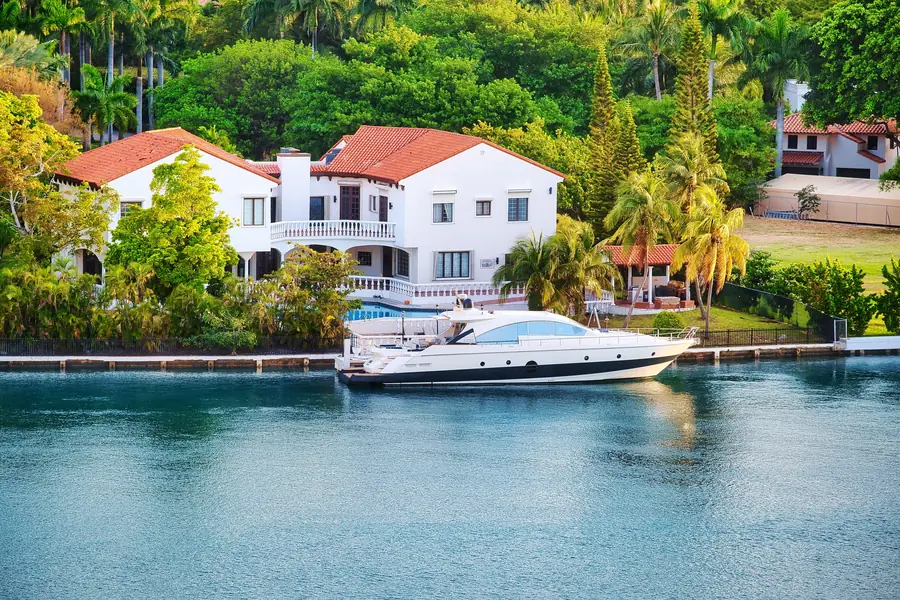
What the water asks of you
Oceanfront has a line drawn across it that most buyers never hear about until they want to build. The coastal construction control line is a state boundary marking the part of the beach-dune system that a hundred-year storm is expected to reach, and seaward of it you may not construct a structure, excavate or alter ground elevations except as the statute permits. If a property straddles it, the line governs any future pool, seawall, addition or rebuild — so it is a question to answer before the purchase, not during the architect’s first visit.
On the bay and the canals the questions are different and just as consequential: who owns the seawall and what condition it is in, what the dock is permitted to be, whether there is a fixed bridge between you and the ocean, and what the elevation certificate says. Our waterfront guide works through the seawall, dock and flood-zone checks in detail, and this page assumes it rather than repeats it.
“Such lines shall be established so as to define that portion of the beach-dune system which is subject to severe fluctuations based on a 100-year storm surge, storm waves, or other predictable weather conditions.”
What a luxury purchase costs in Miami-Dade
There is a quirk at the top of the market worth knowing before you arrange financing, because two taxes on the same mortgage behave in opposite ways. Documentary stamp tax on the note is 35 cents per $100 but it is capped at $2,450, so above roughly $700,000 of borrowing it stops growing entirely. The intangible tax on the mortgage is 0.2 per cent of the loan and it is not capped at all. On a large loan the capped tax becomes a rounding error while the uncapped one keeps climbing in a straight line, which is not what most buyers expect from a pair of taxes charged on the same document.
On the deed, Miami-Dade charges 60 cents per $100 and adds a 45-cent discretionary surtax that is not due where the document transfers a single-family residence. At this level that is a question worth settling in writing with the closing agent rather than assuming, because the answer turns on what exactly the deed conveys — and at these prices 45 cents per $100 is not a detail.
| Item | Typical amount | Who pays |
|---|---|---|
| Documentary stamp tax on the deed (Miami-Dade rate) | $0.60 per $100 of the consideration | Seller (county custom; negotiable) |
| Discretionary surtax on the deed | $0.45 per $100 — not due where the document transfers a single-family residence | Seller (county custom; negotiable) |
| Documentary stamp tax on the note (financed purchases) | $0.35 per $100, capped at $2,450 — so it stops growing on a large loan | Buyer |
| Intangible tax on the mortgage | 0.2% of the loan amount, with no cap | Buyer |
| Owner's title insurance policy | Florida promulgated rate, which continues to rise with price | By county custom; negotiable |
| Wind, flood and excess or surplus-lines insurance | Quoted privately; the state-backed insurer is unavailable at $1,000,000 or more of replacement cost in Miami-Dade | Owner |
| Elevation certificate and survey | Quoted by the surveyor; ordered during due diligence | Buyer |
Deed rate and surtax: Florida Dept. of Revenue; the exemption at F.S. 201.031(1) reaches a single-family residence. Note rate and the $2,450 cap: Florida Dept. of Revenue. Intangible tax: F.S. 199.133. Citizens eligibility thresholds — $1,000,000 of dwelling replacement cost in Miami-Dade and Monroe, $700,000 elsewhere: Citizens Property Insurance Corporation. Coastal construction control line: F.S. 161.053. Milestone inspection: F.S. 553.899(3). · Florida Dept. of Revenue — documentary stamp tax
Association health in a high-floor building
Two different inspection regimes apply to tall residential buildings in this county and they are constantly confused with one another. The state milestone inspection applies to condominium and cooperative buildings three habitable stories or more, due by the end of the year the building turns 30 and every ten years after — with the local enforcement agency able to require it earlier where local circumstances such as proximity to salt water warrant it. Separately, Miami-Dade runs its own building recertification programme under county code, which reaches far more buildings and begins at 30 years inland and 25 on the coast.
Alongside the milestone sits the structural integrity reserve study and the funding obligations that follow from it. For a buyer the practical question is simple and rarely asked early enough: what has the building already been told it must do, what has it set aside to do it, and what is the gap. A special assessment is not a maintenance item at this level — it can be a seven-figure event, and it attaches to the unit rather than to the owner who was there when the report landed.
Insurance, and the checks that cost the most
Insurance is where luxury purchases in Miami most often come apart, and the reason is structural rather than a matter of shopping around. Florida’s state-backed insurer exists for people who cannot get private cover — but in Miami-Dade it is unavailable once replacement cost reaches a seven-figure threshold, so at the top of the market it is not a fallback at all. Above that line you are in the private and surplus-lines market, where appetite varies by roof age, elevation, construction type, claims history and proximity to the water, and where an indication on one address tells you very little about the one next door.
Note the measure as well: eligibility turns on replacement cost, not on price. A substantial waterfront house can carry a replacement cost well below what it sells for, and a newer high-specification property can carry one well above. Getting the actual figure early is what prevents an offer being made on economics that do not survive the first quotation.
Questions buyers at this level ask
Is Citizens insurance available on a luxury home in Miami-Dade?
Not above a certain size. In Miami-Dade and Monroe counties a risk with a dwelling replacement cost of $1,000,000 or more — or a condominium unit with combined dwelling and contents replacement cost at that level — is not eligible for Citizens. Elsewhere in Florida the threshold is $700,000. Above it, cover comes from the private and surplus-lines market, and the test is replacement cost rather than purchase price, so the two figures need to be established separately and early.
What is the coastal construction control line, and does it affect my property?
It is a state line marking the part of the beach-dune system expected to be affected by a hundred-year storm surge. Seaward of it you may not construct a structure, excavate or alter ground elevations except as the statute allows. If a property sits partly seaward of the line, that governs any future pool, seawall, addition or rebuild — which makes it a question to settle before purchase rather than when an architect first visits.
Does a high-floor condominium need a milestone inspection?
If it is three habitable stories or more, yes. The milestone inspection is due by 31 December of the year the building reaches 30 years of age and every ten years after, and the local enforcement agency may require it earlier where local circumstances such as proximity to salt water warrant it. That is a separate programme from Miami-Dade’s own building recertification, which covers far more buildings and starts at 30 years inland and 25 on the coast. The two are routinely confused; a buyer should ask about both by name.
How much tax is charged on a large Florida mortgage?
Two taxes, behaving very differently. Documentary stamp tax on the note is 35 cents per $100 but capped at $2,450, so beyond roughly $700,000 of borrowing it stops increasing. The intangible tax on the mortgage is 0.2 per cent of the loan with no cap at all, so it keeps rising in a straight line. On a large loan the uncapped tax is the one that matters, which surprises most buyers who have read about the cap.
Is the transfer tax different on a luxury home?
The rate is the same but the surtax question is worth settling. Miami-Dade charges 60 cents per $100 on the deed and adds a 45-cent discretionary surtax that is not due where the document transfers a single-family residence. What exactly the deed conveys therefore matters, and at these prices 45 cents per $100 is a figure worth confirming in writing with the closing agent rather than assuming either way.
What does an elevation certificate actually tell me?
It records the elevation of the building relative to the base flood elevation for its flood zone — which drives the flood insurance premium, determines whether the structure is compliant, and sets what a substantial renovation or rebuild would be required to do. On the water it is the single most useful document in the file, and whether one exists at all is worth asking before the offer rather than in the inspection period.
Tell us what you are looking for, quietly.
Water, neighborhood, specification, timing. Confidentiality is the default and not something you have to ask for.