

Short-Term Rentals in Miami: furnished stays, vacation rentals and the rules by city
Furnished and short-term rentals across Miami-Dade and Broward, on both sides — placing a property and finding one. Which city allows what and why the answer changes street by street, when a dwelling becomes a licensed vacation rental, what an association can still do about it, and every tax a short stay owes including the one the 2025 repeal did not touch. For owners, for corporate and relocating tenants, in English or Español.
Updated October 2026
How a short-term or furnished rental works here, step by step
- 01
Start with the address, not the strategy
Short-term rental is not a question you answer at county level. It is answered by the municipality the property sits in, and sometimes by the zoning district within it. Two buildings four blocks apart can have entirely different answers, so the address comes before the spreadsheet.
- 02
Representation and fee, in writing
Scope, term, fee and which side pays, agreed before the search starts. Florida requires a broker to disclose its statutory commission-lien rights at or before you sign, and that is on the face of our agreement rather than buried in it.
- 03
Confirm the city first, then the association
A city can permit it and a condominium or homeowners association can still forbid it, and the association answer is the one most often skipped. Read the declaration and the rules as recorded, not the board member’s recollection on the phone.
- 04
Licence and register before the first guest
Where the dwelling meets the statutory test it is a transient public lodging establishment and needs a state vacation rental licence, usually alongside a local registration or certificate of use and a tax account. Operating first and registering later is how a good property acquires a bad record.
- 05
Price all of the tax, not just the state’s
A short stay owes state sales tax, the county’s discretionary sales surtax, and Miami-Dade’s own accommodations taxes, which are remitted to the county rather than to the state. Underwriting on a nightly rate without them produces a yield that does not exist.
- 06
Furnish and operate to the standard the market prices
Furnished and short-term is an operating business: inventory, linens, turnovers, cleaning, guest communication, maintenance response. Whether you run it or someone runs it for you, it is a cost line, and leaving it out is the second most common modelling error after tax.
- 07
Renting rather than owning? The same checks, in reverse
For a corporate stay, a relocation or a renovation period: confirm the unit is lawfully let short-term, that the association permits it, what is actually included, and what happens if your dates move. A furnished rental that is not permitted is a tenancy that can end abruptly through no fault of yours.
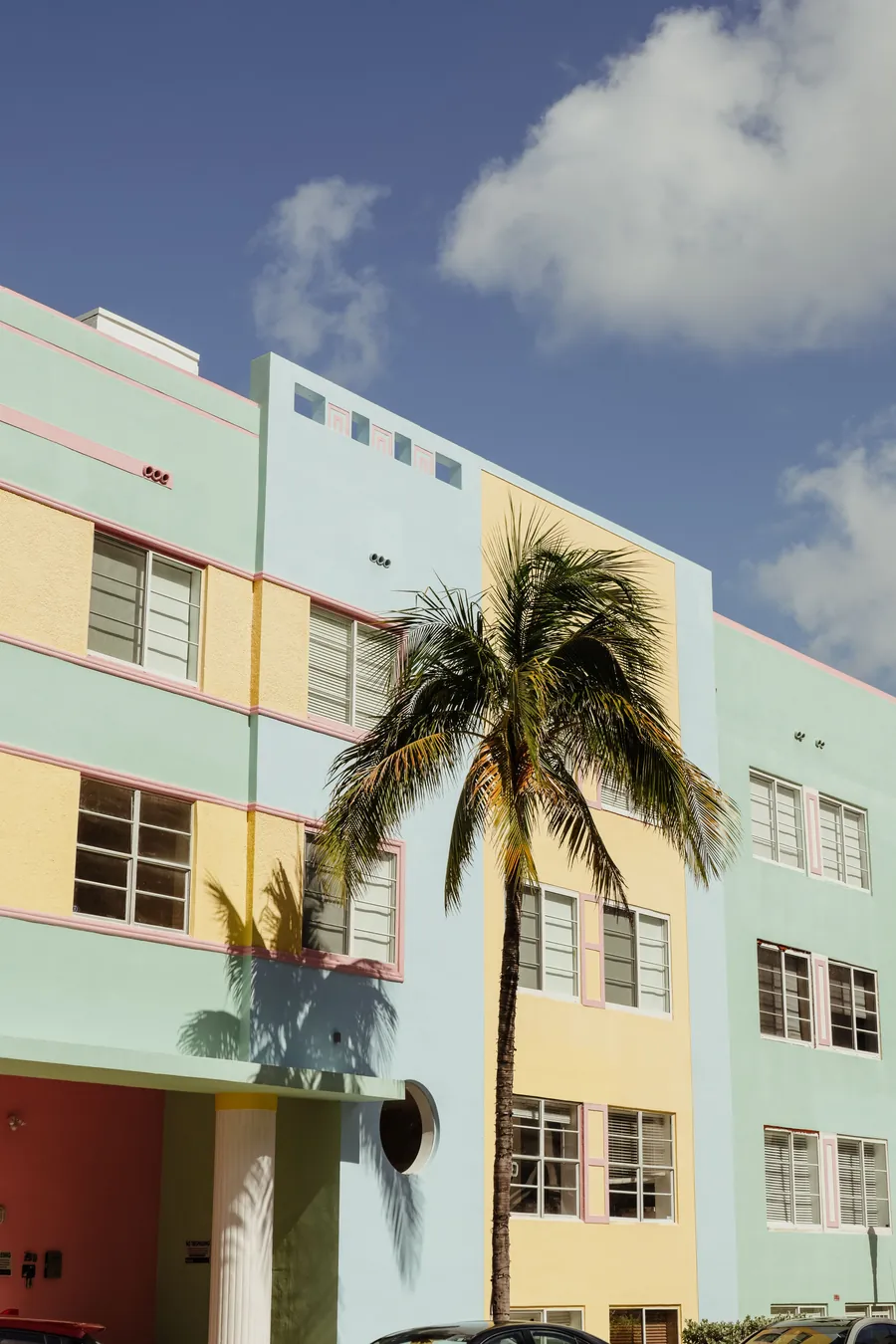
Where short-term rentals are allowed, and where they are not
Florida preempts local regulation of vacation rentals, and then exempts every ordinance that already existed. A local law may not prohibit vacation rentals or regulate how long or how often a property is rented — unless that law was adopted on or before 1 June 2011, in which case it survives untouched. That single carve-out is why the map looks the way it does: the cities that already regulated in 2011 kept their rules, and the ones that did not can no longer impose equivalents.
So there is no Miami answer, only a municipal one, and the question has to be asked of the specific address. A property is a vacation rental in the statutory sense when it is rented to guests more than three times in a calendar year for periods of under 30 consecutive days — or when it is simply advertised as regularly available for such stays. Note what that means in practice: a listing can make a property a transient public lodging establishment before a single guest arrives.
“A local law, ordinance, or regulation may not prohibit vacation rentals or regulate the duration or frequency of rental of vacation rentals.”
The taxes a short stay owes, including the one that did not go away
In 2025 Florida repealed its sales tax on commercial rent, and a great many owners have since assumed the repeal reached them. It did not. That repeal was of one section of the tax code, dealing with commercial leases. Short-term residential stays are taxed under a different section, which is still in force: six per cent of the total rental charged on any let of six months or less, with an exemption only where there is a bona fide written agreement for continuous residence longer than six months.
On top of that sit Miami-Dade’s own accommodations taxes — a Tourist Development Tax and a Convention Development Tax — and the notable thing about them is not the rates but the plumbing: they are remitted to the county rather than to the Department of Revenue, and the municipalities they apply in are not identical. An operator in one city files a different set of returns from an operator four miles away.
| Item | Typical amount | Paid to |
|---|---|---|
| State sales tax on transient rentals | 6% of the total rental charged, on stays of six months or less | Florida Dept. of Revenue |
| Discretionary sales surtax | The county's rate, applied alongside the state tax | Florida Dept. of Revenue |
| Tourist Development Tax | 2% — not collected in Miami Beach, Surfside or Bal Harbour | Miami-Dade County |
| Convention Development Tax | 3% — not collected in Surfside or Bal Harbour | Miami-Dade County |
| Municipal resort tax, where a city levies one in place of the county taxes | Set by that city | The municipality |
| State vacation rental licence | Required where the dwelling meets the transient public lodging test | State of Florida |
| Local registration or certificate of use | Set by the municipality; requirements differ city to city | City or county |
Transient rental tax and the six-month test: F.S. 212.03(1)(a) and (4). The 2025 repeal was of F.S. 212.031, which taxed commercial rent; F.S. 212.03 is a different section and remains in force. Tourist Development and Convention Development Tax rates and municipal exclusions: Miami-Dade County, which collects both directly rather than through the Dept. of Revenue. Vacation rental definition and licensing: F.S. 509.242(1)(c) and 509.013(4)(a)1. Preemption of local regulation and the 1 June 2011 carve-out: F.S. 509.032(7). No combined rate is given here because the surtax varies and summing these would be an assertion none of these sources makes. · Miami-Dade County — Tourist and Restaurant Taxes
Two sides of the same market
For owners: a furnished or short-term rental is an operating business with a licence, a tax account and a service standard, not a lease you sign once a year. It is placed by establishing what is lawful at that address, registering properly, furnishing to the level the rate assumes, and then running it — or having it run — to a standard that produces repeat bookings rather than a gradual slide in reviews and rate.
For tenants: furnished and medium-term stays are how relocations, corporate assignments, renovations and the gap between a sale and a purchase actually get housed in Miami. The things worth confirming before you commit are unglamorous and decisive — that the unit may lawfully be let for your dates, that the association agrees, what is genuinely included, how utilities and parking are handled, and what happens if your dates move. We work both sides of this, which is mostly useful because it means neither side gets told something the other side knows is untrue.
What to check before you buy for short-term rental
The association is the risk that is most often underwritten as if it were zero. A condominium can restrict or prohibit rentals by amendment, and the statutory grandfather attached to those amendments protects owners who were already there and did not consent — it does not protect a buyer. Taking title after an amendment means taking it subject to the amendment, so the seller’s ability to rent short-term is not evidence of yours.
Then the ordinary diligence, with a short-term slant: the building’s rules on guest access, lifts and parking; whether the unit has been operated as a rental and what the tax account history looks like; insurance, which is priced differently for transient occupancy; and the recertification and reserve position of an older building, because an assessment lands on the owner and no booking calendar absorbs it.
Questions owners and tenants ask
Are short-term rentals legal in Miami?
There is no single Miami answer — it depends on the municipality and often the zoning district. Florida preempts local regulation of vacation rentals, so a city may not prohibit them or regulate how long or how often you rent, but that preemption expressly does not apply to ordinances adopted on or before 1 June 2011. Cities that already regulated then kept those rules; cities that did not cannot now introduce equivalents. The question has to be asked of the specific address.
Do I still pay sales tax on a short-term rental after the 2025 repeal?
Yes. The repeal that took effect on 1 October 2025 was of the section taxing commercial rent. Short-term residential stays are taxed under a different section which is still in force: six per cent of the total rental charged on any let of six months or less. The exemption arrives only with a bona fide written agreement for continuous residence longer than six months. Several owners have budgeted as though the repeal reached them; it did not.
Do I need a licence to rent my place short-term in Florida?
If the dwelling meets the statutory test, yes. A unit becomes a transient public lodging establishment when it is rented to guests more than three times in a calendar year for periods of less than 30 consecutive days, or when it is advertised or held out to the public as regularly rented for such periods. The advertising limb matters: a listing can bring a property inside the definition before a guest ever stays.
Can a condo association stop me renting short-term?
It can, and the detail that catches buyers is who an amendment binds. Under Florida condominium law a rental-restriction amendment applies to owners who consented to it and to owners who acquire title after it took effect. So a seller may be renting lawfully under a grandfather personal to them, while you are bound by the restriction from closing. Read the recorded declaration and every amendment before you rely on the seller’s booking history.
What is the difference between a furnished rental and a vacation rental?
Two lines do most of the work. Thirty consecutive days is the duration that puts a stay inside the vacation rental definition for licensing, and six months is the point at which the transient rental tax stops applying where there is a bona fide written agreement for continuous residence. A furnished three-month corporate let and a furnished four-night stay are both furnished rentals, and they sit on opposite sides of nearly every rule that matters.
What taxes does a Miami-Dade short-term rental owe?
State sales tax on transient rentals and the county discretionary sales surtax, both to the Department of Revenue; then Miami-Dade’s Tourist Development Tax at 2 per cent and Convention Development Tax at 3 per cent, which are remitted to the county rather than to the state. The municipal exclusions differ between those two county taxes, and some cities levy their own resort tax instead, so the correct set of returns depends on which city the property is in.
Tell us the address, or the dates.
Placing a furnished rental or looking for one. Either way the first useful answer is what is actually allowed where you are standing.