

Warehouse Space in Miami: industrial, flex and distribution buildings to buy or lease
Warehouse, light-industrial and flex space across Miami-Dade and Broward — the Airport West corridor, Doral, Hialeah, Medley and the land south of them. Clear height measured to the lowest obstruction rather than the ridge, column spacing checked against the racking you actually run, power and loading confirmed on site, and a Phase I ordered on day one of due diligence instead of day twenty. For owner-users, tenants and landlords, in English or Español.
Updated October 2026
How an industrial purchase or lease works here, step by step
- 01
Start from the operation, not the square footage
What moves through the building, on what, how often, and at what hour. Pallet positions, racking height, forklift class, trailer frequency and shift pattern decide the building. Square footage is the last number in that sentence, not the first.
- 02
Representation and fee, in writing
Industrial deals are negotiated individually — scope, term, fee and which side pays are agreed before the search starts. Florida requires a broker to disclose its statutory commission-lien rights at or before you sign, and that language is on the face of our agreement rather than buried in it.
- 03
Measure the building, do not take the flyer’s word
Clear height is to the lowest obstruction — the sprinkler deflector, the joist, the light fixture — not to the ridge, and the two can differ by several feet. Column spacing, dock-high against grade-level, truck court depth and the real power service at the panel all get confirmed on site.
- 04
Confirm the use is allowed and the trucks can turn
Permitted use, the certificate of use, parking and whether a tractor-trailer can physically enter, turn and back in without using a neighbour’s lot. A building that works on paper and strands a 53-foot trailer at the kerb is not a building that works.
- 05
Letter of intent, then contract
Price or rate, deposit, due-diligence window, closing date, and on a lease the tenant improvement allowance and who holds the permit. Settling it here costs a week and saves negotiating the same points twice.
- 06
Phase I first, then everything else
The environmental report has the longest lead time and the largest consequence, so it is ordered at the start of the window, not the end. Title, ALTA survey, recertification status, roof age and an open-permit search run alongside it.
- 07
Close, then commission the building
Certificate of use, local business tax receipt, fire inspection, and a permit for the racking if it is going up new. A building you own and cannot legally occupy yet is a common and entirely avoidable first month.
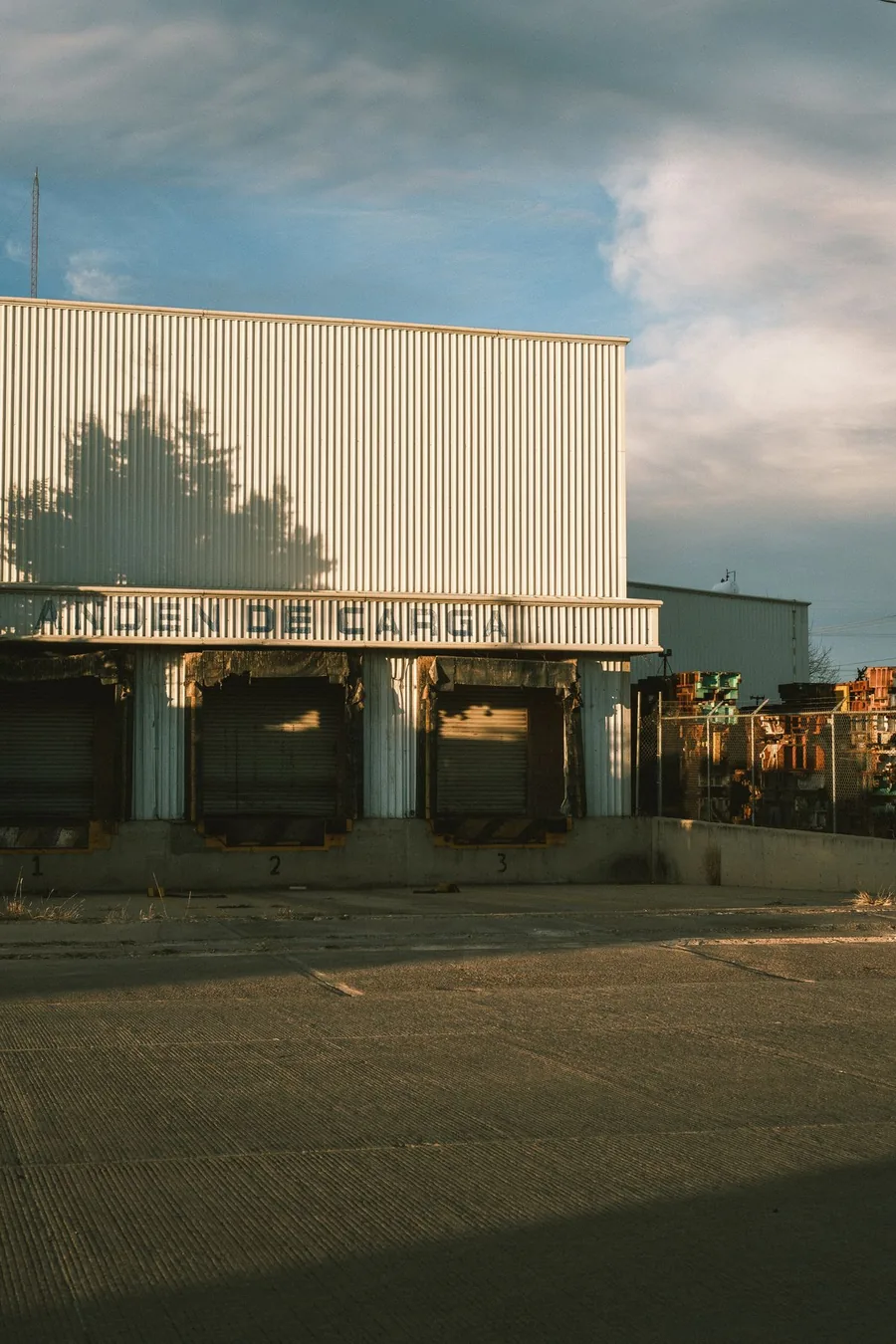
What the building has to do: height, loading, power and the wind code
Four things decide whether an industrial building fits, and none of them is the headline square footage. Clear height, measured to the lowest obstruction, sets how high you can rack and therefore how much of the volume you actually bought. Column spacing decides whether the racking plan survives contact with the slab. Dock-high against grade-level decides who can deliver to you without a liftgate. And the electrical service at the panel — not on the listing — decides whether your equipment runs on day one or after a utility upgrade with its own queue.
Then there is the wind. Miami-Dade and Broward are the whole of the High-Velocity Hurricane Zone, the strictest wind standard in the United States, and it bites hardest on exactly the things a warehouse has most of: a very large roof and very large openings. Any replacement roof, dock door or skylight needs product approval for this zone, which is a narrower and dearer catalogue than the one the rest of Florida buys from. On an older building, roof age is not a maintenance line. It is a capital line.
“This zone consists of Broward and Miami-Dade counties.”
What an industrial purchase costs in Miami-Dade
The transfer tax is the line most often budgeted wrong, because Miami-Dade is the only county in Florida that writes its own deed rate and the difference lands squarely on industrial property. The documentary stamp tax here is 60 cents per $100 against the statewide 70, but the county adds a 45-cent discretionary surtax that is waived only when the document transfers a single-family residence. A warehouse never qualifies, so it transfers at $1.05 per $100 — half again what the same building costs to buy in Broward.
The two line items that are genuinely industrial, rather than inherited from any commercial deal, are the Phase I environmental site assessment and the ALTA survey. Neither is optional on a building with a loading dock, and the survey is what tells you whether the truck court you were shown is on the title you are buying.
| Item | Typical amount | Who pays |
|---|---|---|
| Documentary stamp tax on the deed (Miami-Dade rate) | $0.60 per $100 of the consideration | Seller (county custom; negotiable) |
| Discretionary surtax on the deed — industrial never qualifies for the single-family exemption | $0.45 per $100 of the consideration | Seller (county custom; negotiable) |
| Documentary stamp tax on the note (financed purchases) | $0.35 per $100, capped at $2,450 | Buyer |
| Intangible tax on the mortgage | 0.2% of the loan amount | Buyer |
| Phase I environmental site assessment, to the ASTM E1527-21 standard | Quoted by the consultant; ordered on day one of due diligence | Buyer |
| ALTA survey | Quoted by the surveyor; shows easements, encroachments and whether the truck court is yours | Buyer |
| Building recertification | Engineer or architect report at 30 years inland, 25 coastal, then every 10 years | Owner |
Miami-Dade is the only Florida county with its own deed rate, so an industrial transfer here runs $1.05 per $100 against 70 cents statewide. Surtax exemption: F.S. 201.031(1). Note rate and $2,450 cap: Florida Dept. of Revenue. All-appropriate-inquiries standard and the CERCLA defences it supports: 40 CFR 312.1; ASTM E1527-21 recognised as satisfying it by the EPA rule effective 13 February 2023. Recertification ages: Miami-Dade County Code §8-11(f). Intangible tax: F.S. 199.133. · Florida Dept. of Revenue — documentary stamp tax
Where the industrial space is, and what the zoning allows
Industrial Miami-Dade is not spread evenly. It concentrates in the Airport West corridor around Miami International, in Doral, through Hialeah and Hialeah Gardens, in Medley, and in the older pockets along the rail and the river. Each of those is a different permitting authority — Medley and Doral are their own municipalities, Hialeah is another, and parts of the corridor are unincorporated county — and a use permitted outright in one is a conditional approval next door.
The certificate of use is the piece most often missed. It is permission for your specific business to operate in that specific space, it is issued by the city rather than the county, and it does not come with the building. Outdoor storage, truck parking, hours of operation and anything involving a spray booth, a kiln or a commercial kitchen are where a plan usually meets the code. We confirm all of it in writing before the due-diligence window closes.
Due diligence: environmental first, then the structure
Industrial buildings hold industrial history. A plating line, a press, a paint booth, a motor pool, an underground fuel tank or a dry cleaner all leave something behind, and on contaminated land federal liability follows the owner rather than the polluter unless you have done the work that earns a defence. That work is a Phase I environmental site assessment meeting the federal all-appropriate-inquiries standard, which ASTM E1527-21 satisfies. It is the first thing ordered and the one finding that can end a deal outright.
After that, the structure. Miami-Dade requires recertification by an engineer or architect at 30 years of age — 25 if the building is coastal — and every ten years after. Warehouses are squarely in scope; only single-family homes, duplexes and minor structures are excepted. Alongside it: roof age and the wind-mitigation report, slab condition and thickness if you are racking heavy, the fire-protection system against the commodity you actually intend to store, and a permit search, because an open permit from a previous owner becomes yours at closing.
Questions industrial buyers and tenants ask
What should I check about clear height and loading in a Miami warehouse?
Measure clear height to the lowest obstruction — the sprinkler deflector, the bottom of the joist, the light fixture — not to the ridge or the eave, because that is the figure your racking has to live under and the two can differ by several feet. Then column spacing, which decides whether your rack layout fits between the uprights; dock-high against grade-level, which decides who can deliver without a liftgate; truck court depth, which decides whether a 53-foot trailer can turn; and the service at the electrical panel rather than the number on the flyer.
Does a warehouse need the 40-year recertification in Miami-Dade?
Yes, and earlier than the name suggests. The county requires recertification by an engineer or architect at 30 years for inland buildings and 25 for coastal ones, then every ten years. Only single-family homes, duplexes and minor structures — occupant load of ten or fewer and 2,000 square feet or less — are excepted, so warehouses and light-industrial buildings are in scope. An open recertification is a repair bill with a statutory deadline, and it belongs in the price.
Do I need a Phase I environmental report on an industrial building?
On anything with industrial history, yes — and for a legal reason, not a cautious one. A Phase I that meets the federal all-appropriate-inquiries standard is what earns you the bona fide prospective purchaser and innocent landowner defences. Without it, liability for contamination attaches to you as owner regardless of who caused it. ASTM E1527-21 is the practice the EPA recognises as satisfying the standard.
What does HVHZ mean for a warehouse roof or dock door?
The High-Velocity Hurricane Zone is Miami-Dade and Broward and nowhere else in the country, and it applies to every address in both. In practice it means a replacement roof, dock door, skylight or window has to carry product approval for this zone, drawn from a narrower and more expensive catalogue than the rest of Florida buys from. On a warehouse — one enormous roof and a wall of large openings — that turns roof age from a maintenance note into a capital number you should be pricing before you offer.
Do you still pay sales tax on warehouse rent in Florida?
No. For rental periods beginning on or after 1 October 2025 the state sales tax on commercial rent, warehouses and self-storage included, is repealed, and the discretionary county surtax on rent goes with it. Rent covering periods through September 2025 remains taxable even if it was paid afterwards. Leases drafted before the repeal often still carry a “plus applicable sales tax” clause, which is now inert and best removed at renewal.
Can I run my business out of any warehouse I buy?
Not automatically. You need the use to be permitted in that zoning district and you need a certificate of use for your specific business in that specific space, issued by the city rather than the county and not transferred with the building. Outdoor storage, overnight truck parking, hours of operation, and anything involving a spray booth, kiln or commercial kitchen are the usual places a plan meets the code. It is confirmed in writing during due diligence, not assumed.
Tell us what has to move through the building.
Pallet positions, racking height, trucks per week, power, and where it needs to be. We will tell you what exists before you spend a day touring.