

Land for Sale in Miami-Dade: lots, acreage and what makes a parcel buildable
Residential lots, commercial sites and acreage across Miami-Dade and Broward, bought and sold with the questions answered in the order that matters: which side of the Urban Development Boundary the parcel sits on, what the zoning permits, whether sewer and water actually reach it, what the survey and the elevation say, and whether it has to be platted before anyone will issue a permit. For builders, owner-users and buyers holding land, in English or Español.
Updated October 2026
How a land purchase works here, step by step
- 01
Decide what you are building first
Use, unit count or building footprint, parking, and whether it is for you or for resale. Every question after this one is answered differently depending on the answer to this one, and a parcel is only ever right or wrong relative to a plan.
- 02
Representation and fee, in writing
Land deals are negotiated individually — scope, term, fee and which side pays are agreed before the search starts. Florida requires a broker to disclose its statutory commission-lien rights at or before you sign, and that is on the face of our agreement.
- 03
Check the boundary, then the zoning
Inside or outside the Urban Development Boundary comes before everything, because outside it the county’s own plan does not contemplate urban development and no amount of zoning argument moves that quickly. Then the zoning district, the permitted use, setbacks, height and lot coverage.
- 04
Confirm the utilities that legally gate the project
Sanitary sewer, solid waste, drainage and potable water are the four the state makes concurrency mandatory for. We confirm availability in writing from the utility rather than from the listing, and establish what a connection actually costs and how far away it is.
- 05
Survey, elevation and access before the offer
A boundary survey showing easements and encroachments, the flood zone and base flood elevation, how much fill the site will need, and legal access to a maintained public road. Land without recorded access is land you cannot reach.
- 06
Letter of intent, then a real due-diligence window
Price, deposit, closing date, and a due-diligence period long enough to get answers from a county rather than from a broker. On land the window is the whole protection, because the statutory disclosure duty does not reach most of these parcels.
- 07
Plat, permit, then build
If the parcel was not legally created, it has to be platted before permits issue — tentative plat, final plat, recorded. Impact fees come due at the building permit. We map that sequence against your timeline before you commit, not after.
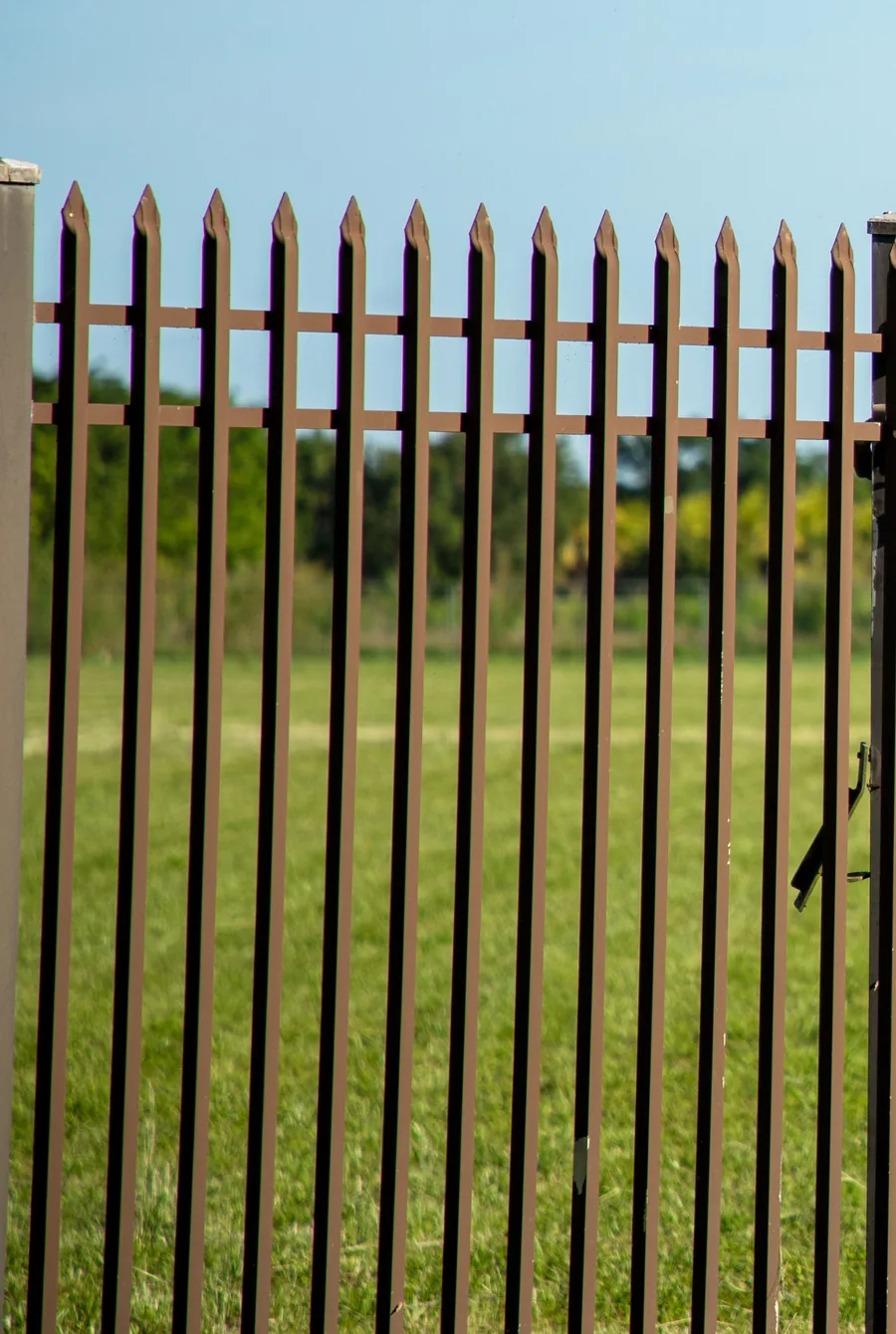
What makes a parcel buildable: the boundary, the zoning, the utilities
Three gates, in order. The first is the Urban Development Boundary, the line Miami-Dade draws in its Comprehensive Development Master Plan between where urban development is contemplated and where it is not. It is not zoning and you do not argue with it at a hearing; moving it takes a CDMP amendment, and the county accepts those applications in January, May and October with a full review of the plan every seven years. The second is the zoning district — permitted use, density, setbacks, height, coverage — which is where most buyers start and which is the wrong place to start.
The third is utilities, and here the state is unusually precise about which ones count. Concurrency — the rule that a development cannot be approved unless the public facilities serving it meet their level-of-service standards — is mandatory statewide for exactly four things. Roads are not among them. A parcel can be fully concurrent on all four and still sit on a two-lane road nobody has any plan to widen, which is a planning problem rather than a permitting one, and it is still your problem.
“Sanitary sewer, solid waste, drainage, and potable water are the only public facilities and services subject to the concurrency requirement on a statewide basis.”
What a land purchase costs in Miami-Dade
The transfer tax surprises land buyers more than any other group, and the reason is a single word in the statute. Miami-Dade charges 60 cents per $100 on the deed against the statewide 70, then adds a 45-cent discretionary surtax that is waived only where the document transfers a single-family residence. Vacant land is not a residence — not even the lot you intend to put one on — so the exemption does not reach it and the parcel transfers at $1.05 per $100. Buyers who budgeted the statewide 70 cents are short by half as much again.
After that the land-specific lines are the survey and the plat. The survey is not optional: it is what establishes the easements, the encroachments, the elevation and whether there is legal access. The platting cost is the one most often left out entirely, because it is not a closing cost at all — it lands after you own the parcel, and it arrives with the engineering that supports it.
| Item | Typical amount | Who pays |
|---|---|---|
| Documentary stamp tax on the deed (Miami-Dade rate) | $0.60 per $100 of the consideration | Seller (county custom; negotiable) |
| Discretionary surtax on the deed — vacant land is not a dwelling, so the exemption does not reach it | $0.45 per $100 of the consideration | Seller (county custom; negotiable) |
| Documentary stamp tax on the note (financed purchases) | $0.35 per $100, capped at $2,450 | Buyer |
| Intangible tax on the mortgage | 0.2% of the loan amount | Buyer |
| Boundary survey and elevation certificate | Quoted by the surveyor; ordered during due diligence | Buyer |
| Platting — tentative plat, final plat, recording | County review and recording fees, plus the engineering behind them | Owner, after closing |
| Impact fees, due at building permit | Roads, parks, public buildings, fire and rescue, law enforcement, educational facilities | Owner |
Miami-Dade is the only Florida county with its own deed rate, so vacant land transfers here at $1.05 per $100 against 70 cents statewide. Surtax exemption: F.S. 201.031(1), which reaches only a single-family residence. Note rate and $2,450 cap: Florida Dept. of Revenue. Concurrency facilities: F.S. 163.3180(1). Platting sequence: Miami-Dade County Code Chapter 28. Impact fee categories are collected at building permit issuance; amounts are set by ordinance, vary by municipality and are revised periodically, so none is stated here. Intangible tax: F.S. 199.133. · Florida Dept. of Revenue — documentary stamp tax
Owning the land is not permission to build on it
This is the step that catches people. A parcel that was never legally created as a lot of record has to be platted before it can be built on: Miami-Dade’s own guidance is that you generally cannot obtain building permits, or sell subdivided property, in the unincorporated county without an approved plat or a waiver. The sequence is a tentative plat for review, then a final plat approved by the County Commission, then recording in the public records.
That is a calendar, not a form. It runs alongside paving and drainage plans and environmental sign-off, and it is why a closing date and a groundbreaking date are rarely the same conversation. Where a parcel already is a lot of record, none of this applies — which is exactly why it is worth establishing which of the two you are buying before the deposit goes hard rather than afterwards.
Flood, fill, access and what the survey has to show
Elevation decides more about a South Florida parcel than almost anything visible from the road. The flood zone and base flood elevation set what you must build to, how much fill the site needs to get there, and what the insurance will cost for as long as you own it — and fill is a real line in a budget, not a rounding error. Drainage is one of the four concurrency facilities, so how the site sheds water is a permitting question as well as an engineering one.
Then the survey. It should show the boundary against the legal description, every recorded easement, any encroachment from a neighbour, and legal access to a maintained public road. Land with no recorded access is land you cannot reach, and that is a defect no price adjustment fixes. Where the parcel sits near a wellfield or a canal there are further county restrictions on what may be done on it, and those are read before the offer, not after.
Questions land buyers ask
Can I build a house on any vacant lot in Miami-Dade?
No. Three things have to line up first: the parcel has to be on the developable side of the Urban Development Boundary, the zoning district has to permit what you intend at the density and height you intend, and the utilities have to be available. On top of that, if the parcel was never legally created as a lot of record it has to be platted before permits will issue. A lot can fail any one of those and still be perfectly pleasant to stand on.
What is the Urban Development Boundary and why does it matter?
It is the line in Miami-Dade’s Comprehensive Development Master Plan separating where urban development is contemplated from where it is not — drawn to protect the Everglades, the wetlands and the county’s agricultural land. Inside it, public infrastructure is directed and development orders are contemplated; outside it, urban services are steered away. It is not zoning, so it does not move at a hearing: it takes a plan amendment, and applications are accepted in January, May and October. It is the first question to ask about any parcel and the one most often asked last.
Do I need to plat land before I can get a building permit?
If the parcel was not legally created as a lot of record, yes. Miami-Dade’s own guidance is that you generally cannot obtain building permits or sell subdivided property in the unincorporated county without an approved plat or a waiver. The sequence is a tentative plat for review, a final plat approved by the County Commission, and then recording. It runs alongside paving, drainage and environmental approvals, so it is a timeline item rather than a form, and it is worth establishing before the deposit goes hard.
What utilities have to be available before a project is approved?
Florida makes concurrency mandatory statewide for four: sanitary sewer, solid waste, drainage and potable water. Those facilities have to meet their level-of-service standards for a development to be approved. Roads are deliberately not on that list — transportation concurrency is optional for a local government — so a parcel can satisfy every mandatory test and still sit on a road with no widening planned. Confirm availability in writing from the utility, not from the listing.
Why is the transfer tax higher on vacant land than on a house?
Because the exemption is written for dwellings. Miami-Dade charges 60 cents per $100 on the deed and adds a 45-cent discretionary surtax, and the surtax is waived only where the document transfers a single-family residence. A vacant lot is not a residence even if you intend to build one on it, so land transfers at $1.05 per $100 — half again the 70 cents charged everywhere else in Florida. Budget it at the letter of intent.
What should a survey show before I buy land?
The boundary as it actually runs against the legal description, every recorded easement, any encroachment from a neighbouring parcel, the elevation relative to the base flood elevation, and legal access to a maintained public road. That last one is the quiet deal-killer: a parcel with no recorded access is a parcel you cannot lawfully reach, and no price adjustment repairs it.
Tell us what you intend to build.
Use, size, budget and timeline. We will tell you which parcels can actually carry it before you walk one.