

Agricultural Land for Sale in Miami-Dade: the Redland, farms and the greenbelt classification
Groves, nurseries, row-crop acreage and rural homesites across the Redland and south Miami-Dade, bought and sold by someone who reads the classification file before the listing. What the agricultural assessment is actually worth, what a sale does and does not do to it, where the Urban Development Boundary runs, what the water permit allows, and why the law protects the grove next door rather than you. In English or Español.
Updated October 2026
How an agricultural purchase works here, step by step
- 01
Decide which of three things you are buying
A working operation, a homesite with land around it, or a hold. They are priced differently, taxed differently and carry different risk, and almost every mistake on agricultural land starts with a buyer who has not said which one out loud.
- 02
Representation and fee, in writing
Agricultural deals are negotiated individually — scope, term, fee and which side pays are agreed before the search starts. Florida requires a broker to disclose its statutory commission-lien rights at or before you sign, and that is on the face of our agreement.
- 03
Pull the classification status before you price it
Is the land classified agricultural now, on what use, and for how long? The classification is applied for annually, not granted permanently, so its history tells you how the property appraiser has already judged this operation — which is the best available guide to how they will judge yours.
- 04
Read the water, not just the land
Wells, pumps, canal frontage and whether the operation holds a water use permit from the district — what it allows, and whether it travels with the property. On acreage the water question is frequently worth more than the acre count and is asked a great deal later than it should be.
- 05
Walk the structures, the access and the soil
Packing houses, barns, labour housing and greenhouses each carry their own permitting history, and an unpermitted structure is inherited at closing. Legal access to a maintained road, the soil and rock profile, and drainage all get confirmed before the offer.
- 06
A due-diligence window that reaches the deadline
If the timing allows it, the window should run far enough to settle the classification question rather than leave it to the following spring. Where it cannot, the filing becomes a closing obligation written into the contract instead of an assumption.
- 07
Close, then file on or before March 1
The return is annual and the date is hard. A buyer who closes in April and files in May has not kept the classification — they have waited a year for it, and paid a market-value assessment in the meantime.
The agricultural classification, and what a sale does to it
This is the question the whole market turns on, and it is widely misunderstood in both directions. The classification — the greenbelt — means that in a year where the application has been made and granted, the land is assessed solely on its agricultural use rather than on what a developer would pay for it. On Redland acreage that gap is the difference between a tax bill a farm can carry and one it cannot.
A sale does not automatically end it. The statute reclassifies land as nonagricultural in only two situations: where it has been diverted to a nonagricultural use, and where it is no longer being used for agricultural purposes. Changing owners is neither. But a sale does not carry the classification either, because the classification was never permanent to begin with — it is applied for every year, and the new owner has to file. The property appraiser then decides whether the use is a good-faith commercial agricultural use, weighing how long the land has been so used, whether that use has been continuous, the purchase price paid, the size relative to the use, whether the land is cared for to accepted commercial practice, and the terms of any lease. Notably, no minimum acreage may be required.
“Lands may not be classified as agricultural lands unless a return is filed on or before March 1 of each year.”
What an agricultural purchase costs in Miami-Dade
The transfer tax reaches agricultural land the same way it reaches commercial and vacant land, and for the same reason. Miami-Dade charges 60 cents per $100 on the deed against the statewide 70, and adds a 45-cent discretionary surtax waived only where the document transfers a single-family residence. A grove, a nursery or a field is not a residence, so the parcel transfers at $1.05 per $100 — half again what the same land would cost to transfer in any other Florida county.
The line that is not a closing cost at all is the one that matters most: the assessment itself. Keep the classification and the land is assessed on its agricultural use. Lose it, or simply fail to file by the first of March, and it is assessed at market value for that year. On acreage near the development edge that single difference can exceed every other number on this page combined.
| Item | Typical amount | Who pays |
|---|---|---|
| Documentary stamp tax on the deed (Miami-Dade rate) | $0.60 per $100 of the consideration | Seller (county custom; negotiable) |
| Discretionary surtax on the deed — a grove is not a dwelling, so the exemption does not reach it | $0.45 per $100 of the consideration | Seller (county custom; negotiable) |
| Documentary stamp tax on the note (financed purchases) | $0.35 per $100, capped at $2,450 | Buyer |
| Intangible tax on the mortgage | 0.2% of the loan amount | Buyer |
| Boundary survey and elevation certificate | Quoted by the surveyor; ordered during due diligence | Buyer |
| Agricultural classification return | Filed with the Property Appraiser on or before 1 March, every year, by the owner of record | Owner |
| Losing, or failing to file for, the classification | The land is assessed at market value for that year instead of on its agricultural use | Owner |
Deed rate and surtax: Florida Dept. of Revenue; the surtax exemption at F.S. 201.031(1) reaches only a single-family residence. Note rate and $2,450 cap: Florida Dept. of Revenue. Classification return deadline: F.S. 193.461(3)(a). Assessment on agricultural use: F.S. 193.461(6)(a). Reclassification only on diversion or cessation of agricultural use: F.S. 193.461(4). Bona fide use factors, and that no minimum acreage may be required: F.S. 193.461(3)(b). Intangible tax: F.S. 199.133. · Florida Dept. of Revenue — documentary stamp tax
The Redland, and the line that runs beside it
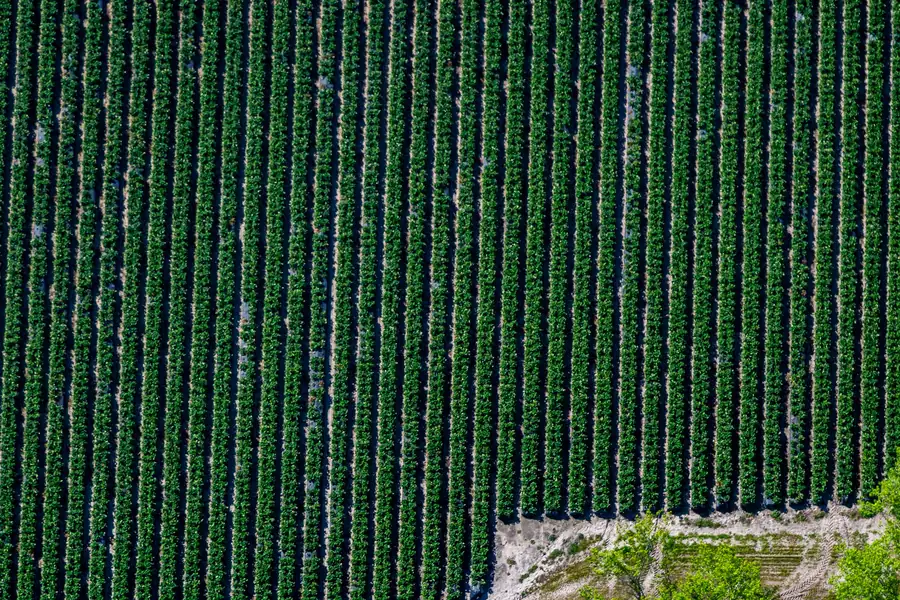
South Miami-Dade below Homestead and east of the Everglades is the agricultural heart of the county — tropical fruit groves, ornamental and palm nurseries, row crops, and the rural homesites scattered among them. It is one of the few places in the United States where avocados, mangoes and lychees are grown commercially, and that is a function of a frost line, not of zoning.
It is also where the Urban Development Boundary runs, and the two facts are related: much of what keeps the Redland agricultural is that the county’s own plan does not contemplate urban development there. For a buyer that cuts both ways. It protects the character and the neighbours you are buying for. It also means the parcel is unlikely to become a subdivision on the timetable a speculative price would imply, and that moving the line is a plan amendment rather than a hearing.
Water, structures, soil and the neighbours
Water first. An operation of any scale draws from wells or a canal under a water use permit from the district, and what that permit allows — the source, the allocation, the term — is a property question, not a farming detail. Confirm it exists, read what it permits, and establish what happens to it on a change of ownership before the number on the contract is agreed.
Then the built history. Packing houses, barns, greenhouses, labour housing and wells all carry permitting records, and anything unpermitted becomes the new owner’s problem at closing. Soil and rock profile decide what can actually be planted and what it costs to plant it. And there is a disclosure point peculiar to this page: Florida’s statutory duty to disclose known material facts treats agricultural property of ten acres or fewer as a residential sale — so it applies. Above ten acres it does not, and the due-diligence period is the whole of your protection.
Questions buyers of agricultural land ask
Does the agricultural classification transfer when I buy the land?
Not by itself, and this is the most consequential misunderstanding on the subject. A sale is not one of the two things that force reclassification — the statute reclassifies land diverted to a nonagricultural use, or land no longer used for agricultural purposes, and a change of owner is neither. But the classification was never permanent: it is applied for every year, so the new owner has to file a return on or before 1 March. The property appraiser then judges whether the use is a good-faith commercial agricultural use, with the purchase price paid as one of the listed factors.
How much land do you need for an agricultural classification in Florida?
There is no minimum. The statute directs the property appraiser to weigh size in relation to the specific agricultural use, and states plainly that a minimum acreage may not be required for agricultural assessment. A small, serious, continuously worked operation can qualify where a large, idle one does not — because what is being tested is whether the use is a good-faith commercial agricultural use, not how many acres sit under it.
What is the agricultural classification actually worth?
In a year where the application has been made and granted, the assessment of the land is based solely on its agricultural use rather than on market value. On acreage anywhere near the development edge that is the difference between a tax bill a farm can carry and one that forces a sale. It is also why the 1 March date deserves more attention than almost anything else in the purchase.
Can I build a house on agricultural land in Miami-Dade?
Sometimes, and it depends on the zoning district rather than on the classification — they are two different systems answering two different questions. Agricultural zoning in the county generally contemplates a residence associated with the land, with its own setbacks and limits. What it does not contemplate is subdivision, and most of the Redland sits outside the Urban Development Boundary, where the county plan does not provide for urban development at all.
Does the seller have to disclose problems on a farm?
It depends on the acreage, and the line is exact. Florida defines a residential sale to include agricultural property of ten acres or fewer, so on a ten-acre parcel the statutory duty to disclose known facts materially affecting value applies. Above ten acres it does not, and what you learn you learn because the due-diligence period and the contract made room for you to look.
What should I check about water on agricultural land?
Whether the operation draws from wells, a canal or both; whether it holds a water use permit from the water management district; what that permit allows by source, allocation and term; and what happens to it on a change of ownership. On acreage the water is often worth more than the land, and the question is almost always asked later than it should be.
Tell us what you want the land to do.
Farm it, live on it, or hold it. Each one points at different parcels, and we would rather sort that out before you drive to Homestead.