

Miami Springs Homes for Sale & Neighborhood Guide
Miami Springs is a 2.98-square-mile city on the north side of Miami International Airport, laid out by aviation pioneer Glenn Curtiss in the 1920s around a golf course and a Pueblo Revival hotel.
Updated October 2026
Buying in Miami Springs means a single-family house in a small, self-contained city with its own police, golf course and schools, four miles from the airport terminals and ten from downtown. Most lots hold one house; condo and townhouse supply is thin. The trade-off is aircraft noise on some streets and an older housing stock that rewards a careful inspection.
- County
- Miami-Dade
- ZIP codes
- 33166
- Population
- 13,859 (2020)
- Incorporated
- 1926
- Area
- 2.98 sq mi (2.88 land)
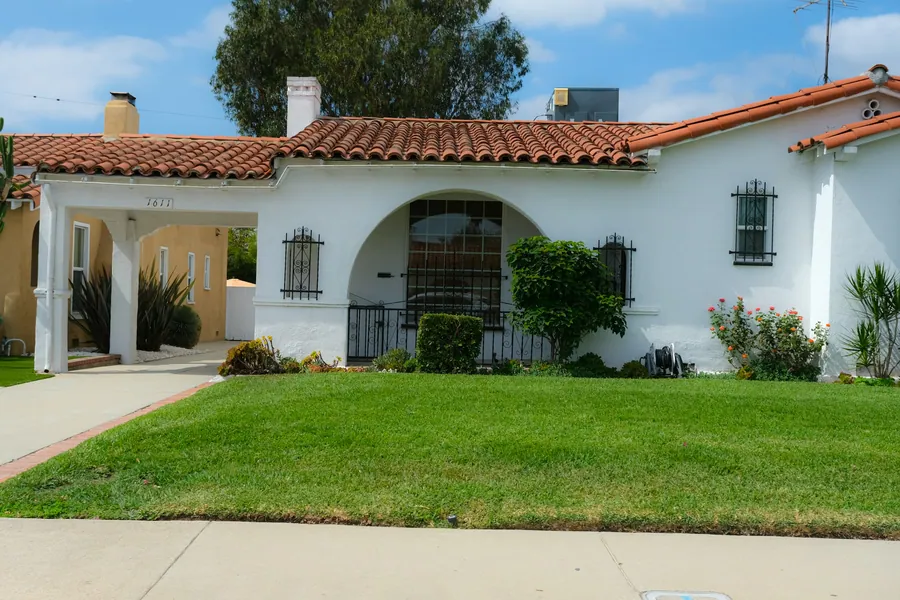
Almost entirely single-family: 1920s Pueblo Revival originals near the Circle and Curtiss Parkway, postwar concrete-block ranches on rectangular lots, and scattered two-story rebuilds. Few condos or apartments, mostly toward the canal and airport edges. No gated communities and almost no new construction.
Redfin, Miami Springs housing market · source
Active inventory
Homes for sale in Miami Springs
We send the full Miami Springs list — every active listing, with the flood zone and association notes — the same day you ask.
That means the whole active list for Miami Springs — not the filtered slice a national portal decides to show you, and not the three homes an advertising budget pushed to the top of the page. Every address comes back with the things that actually decide whether a property is worth your Saturday: the FEMA flood zone it sits in, the association's real picture, and the county permit history behind the walls.
- The complete active list Every property on the market in Miami Springs, in one place, in one email.
- Flood zone, address by address The FEMA zone each property sits in — before you fall for the kitchen.
- The association picture Dues, reserves, special assessments on the books, and 40-year recertification status.
- County permit history What was permitted, what was closed out, and what was never pulled at all.
There is no live MLS search on this site — no search box, no map full of pins, and nothing that quietly serves you last month's prices and homes that went under contract weeks ago. A ClearPath agent pulls the list by hand instead. You name the area, a person goes and gets what is genuinely on the market, reads it before it leaves, and sends it to you. Then that same person answers whatever you want to ask about any address on it, which is the part a search box was never able to do anyway.
No portal account. No login. Your details are not sold on to anyone — the list comes from the brokerage that would represent you, and you can ask about any address on it.
Start here
Get the Miami Springs list
Name, number, email. That is the whole ask — the list comes back from ClearPath directly.
Thank you. ClearPath will be in touch shortly.
Rather talk it through? Call or text 786 · 797 · 6400
Living in Miami Springs: who lives here and what the housing looks like
Miami Springs sits northwest of downtown Miami, with Hialeah across the Miami Canal to the northeast, the Village of Virginia Gardens to the southwest and Miami International Airport along its southern edge. The canal forms the northern and eastern boundary. Glenn Curtiss and James Bright laid the town out during the 1920s land boom as Country Club Estates, built around the golf course they opened in 1923, and it incorporated on August 23, 1926. The name came from a spring that once supplied part of Miami's fresh water.
Curtiss built in the Pueblo Revival style borrowed from New Mexico: flat roofs, rounded parapets, thick stuccoed walls. The Hotel Country Club of 1927, later Dr. John Harvey Kellogg's sanitarium and then the Fair Havens Center, and the Curtiss Mansion at 500 Deer Run, finished in 1925 to a Martin L. Hampton design, are the surviving anchors. The mansion joined the National Register in 2001 and reopened in 2012 after a 17-year restoration; the city owns it.
The 1924 Warren Pony swing bridge still crosses the canal to Hialeah. In 2008 the federal Preserve America program designated Miami Springs a Preserve America Community, and the Historical Society runs heritage tours each year.
“Each year, new properties become subject to the recertification process at 30 years and every 10-year interval thereafter for the life of the structure”
Housing stock: one house per lot, many eras
The city is overwhelmingly single-family. The oldest houses are the 1920s Pueblo Revival originals near the Circle and along Curtiss Parkway and Deer Run; most of the rest went up in the postwar decades as concrete-block ranch houses on rectangular lots, with a scattering of later two-story replacements. Streets curve around the golf course rather than following the Miami grid, which is part of why the city reads as a separate town.
Apartment and condo buildings are few and sit mostly toward the canal and airport edges, along with some duplexes. There are no gated master-planned communities, no towers and almost no new-construction tracts; the supply is resale houses, and in any given month only a small number of them are listed. Buyers who want a lot with room for a pool and a garage, inside a city with its own services, are the typical match.
Getting around: next to the airport, close to everything west
Miami International Airport is 4 driving miles away by NW 67th Avenue, and the terminals are visible from the southern streets. Downtown Miami is 10 miles by the SR 112 Airport Expressway, Miami Beach 12 miles by the same route, and Doral 6 miles west by NW 36th Street. Okeechobee Road, the Palmetto Expressway and LeJeune Road frame the city.
Rail is close but not inside the city limits. The Okeechobee Metrorail station at 2005 West Okeechobee Road in Hialeah, open since 1985 with 1,207 parking spaces, serves Miami Springs, and Miami Central Station beside the airport connects Metrorail, Tri-Rail and Amtrak. Inside the city, Curtiss Parkway and the Circle carry most local traffic.
| Downtown Miami / Brickell | 10 mi | |
|---|---|---|
| Miami International Airport | 4 mi | |
| Miami Beach | 12 mi | |
| Doral | 6 mi |
Daily life: the golf course is the town square
The Miami Springs Golf and Country Club at 650 Curtiss Parkway is the oldest municipal course in South Florida. William Langford and Theodore Moreau of Chicago designed the 18-hole, par-71 layout, 6,400 to 6,700 yards from three tees; it opened in 1923 and hosted the Miami Open from 1925 to 1955. The city designated it a historic site after a 2006 renovation. Because the course is public and city-owned, it works as open space for everyone, not just members.
The Circle at the center of Curtiss Parkway is the commercial core, with restaurants and small shops in low buildings, and the Curtiss Mansion hosts events. Larger retail sits just outside on NW 36th Street and in Doral. There is no hospital in the city; the closest emergency departments are in Hialeah and near the airport.
Schools and services
Miami-Dade County Public Schools operates two elementary schools inside the city, Springview Elementary and Miami Springs Elementary, both pre-K through fifth grade. Miami Springs 6-12 Preparatory Academy at 751 Dove Avenue, founded in 1964, absorbed the former middle school in 2026 after the district closed the 150 South Royal Poinciana Boulevard campus for low enrollment; it houses an aerospace magnet, a hospitality and tourism academy dating to 1987 and an iTech robotics academy.
Two charters operate in the city, ISAAC Academy for kindergarten through eighth grade and the Academy for Innovative Education for kindergarten through twelfth, and Blessed Trinity is the parish school. The city runs its own police department, recreation programs, a community center and pool, and the golf course.
- Springview ElementaryElementary
- Miami Springs ElementaryElementary
- Miami Springs 6-12 Preparatory AcademyHigh school
- ISAAC AcademyCharter
- Academy for Innovative EducationCharter
- Blessed Trinity Catholic SchoolPrivate
Buying here: what to check
Stand in the yard for a while. Runway alignment decides which streets hear departures, and it varies block to block; visit at different hours before you commit. Then pull the FEMA panel. Miami Springs is inland, but the Miami Canal wraps two sides of the city and parcels near it can fall in an AE zone while blocks farther in sit in X. An elevation certificate settles the insurance question.
Most houses are decades old. Order a four-point inspection early, since roof age, electrical panel type and plumbing material drive both the insurance quote and the lender's comfort. Check that additions, enclosed porches and converted garages carry closed permits with the city building department. Pueblo Revival originals may carry historic designation that limits exterior changes; ask before you plan a renovation.
Selling here: what buyers respond to
Buyers arrive already sold on the city; what they weigh is the specific house. A newer roof, impact windows, an updated electrical panel and a clean permit history move a Miami Springs listing faster than cosmetic staging, because they change the insurance number. If your street is quiet under the flight path, say so with the hours you tested.
Because few houses list in any month, well-priced homes draw attention quickly and overpriced ones sit. Price against closed sales within the city from the last six months, not against Doral or Hialeah.
Before you offer in Miami Springs: the checklist
- Visit at several hours; runway use decides which streets hear departures.
- Order a four-point inspection early: roof, electrical, plumbing and HVAC drive the insurance quote.
- Confirm closed permits on additions, enclosed porches and converted garages.
- Pull the FEMA panel; canal-side parcels may be AE while interior blocks are X.
- Ask whether a Pueblo Revival original carries historic designation before planning exterior work.
Before you list in Miami Springs: what works
- Lead with roof age, impact windows, electrical panel and permit history; they change the insurance number.
- Price against closed sales inside the city limits, not Doral or Hialeah.
- Note tested quiet hours if the house sits away from the departure path.
- Few listings each month means a well-priced house gets seen fast; an overpriced one sits.
Is Miami Springs a good place to live? Questions people ask
Is Miami Springs noisy because of the airport?
Some streets are, some are not. The city borders Miami International Airport on its south side, and runway alignment decides which blocks hear departures. Visit the specific house at morning, midday and evening before you write an offer, and ask neighbors. Interior streets around the golf course tend to be quieter than the southern edge.
How far is Miami Springs from downtown Miami and the airport?
The airport is 4 driving miles by NW 67th Avenue. Downtown is 10 miles by the SR 112 Airport Expressway, Miami Beach 12 miles, Doral 6 miles. The Okeechobee Metrorail station in Hialeah serves the city, and Miami Central Station beside the airport connects Metrorail, Tri-Rail and Amtrak.
What is the history of Miami Springs?
Glenn Curtiss and James Bright founded it in the 1920s as Country Club Estates, around the golf course they opened in 1923, in a Pueblo Revival style borrowed from New Mexico. It incorporated on August 23, 1926. The Curtiss Mansion, the 1927 hotel and the 1924 swing bridge survive, and the city is a designated Preserve America Community.
Which schools serve Miami Springs?
Springview Elementary and Miami Springs Elementary for pre-K through fifth, then Miami Springs 6-12 Preparatory Academy, which took in the former middle school in 2026 and runs aerospace and hospitality magnets. ISAAC Academy and the Academy for Innovative Education are charters inside the city, and Blessed Trinity is the parish school.
Is Miami Springs in a flood zone?
Parts of it. The city is inland, but the Miami Canal wraps its north and east sides, and parcels near the canal can be in FEMA's AE zone while interior blocks are often in X. Flood insurance is mandatory with a federally backed loan only in AE. Check the address with the flood tool and ask for an elevation certificate.
Are there condos or new construction in Miami Springs?
Very little of either. The city is almost entirely single-family houses on individual lots, with a handful of apartment and condo buildings near the canal and airport edges. There are no gated master-planned communities and no towers. If you need a new build or a low-maintenance condo, Doral next door has far more supply.
Talk to a Miami Springs realtor
Budget, bedrooms, timeline. We send the current list and a straight read on the area within the day.
Or book a call