

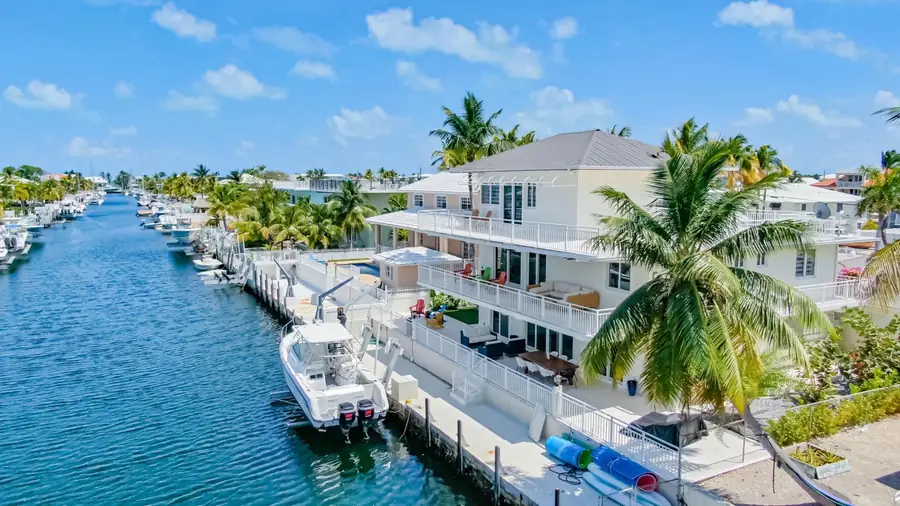
“A person may not commence any excavation, construction, or other activity involving the use of sovereign or other lands of the state, the title to which is vested in the board of trustees of the Internal Improvement Trust Fund under this chapter, until the person has received the required lease, license, easement, or other form of consent authorizing the proposed use.”
The short answer: check five things before you write an offer on Miami waterfront — the flood zone for the exact address, the elevation certificate, the seawall’s condition and who owns it, the dock’s permits and state authorization, and the route from your dock to open water. Each one moves either the insurance premium or the cost of ownership, and all five are knowable during the inspection period.
What makes waterfront different from any other Miami purchase?
Everything that makes it desirable also makes it a different kind of asset. You are buying a structure, a shoreline and, usually, something built out over water that the state has an interest in. A conventional inspection covers the house. It does not cover the seawall, the dock pilings, the lift motor, the depth at low tide, or whether the previous owner pulled permits for any of it.
That is why waterfront buyers in Miami-Dade routinely bring two extra inspections — a marine or seawall inspection and a survey that shows the shoreline — and why the insurance quote arrives earlier in the process than it would on an inland house.
Which flood zone is the property in, and why does it decide the premium?
Waterfront addresses in Miami-Dade sit mostly in coastal AE zones or, where wave action is expected, VE zones. Both are Special Flood Hazard Areas, so a federally backed mortgage requires flood insurance; VE carries the highest premiums of any zone.
The document that moves the number most is the elevation certificate, which records the elevation of the lowest floor against the base flood elevation. Under FEMA’s Risk Rating 2.0 each property is priced individually, so an elevated house and a slab-on-grade house on the same canal can carry very different premiums. Ask whether a certificate exists before you offer; if it does not, budget for a surveyor to produce one and price the insurance conservatively until it exists.
Run the exact address through the flood zone lookup, then read the Miami flood zone guide for what each letter means and flood, windstorm and roof insurance for how the three policies fit together.
What do you actually need to check? A waterfront checklist
| Check | Why it matters on the water | Where to get it |
|---|---|---|
| Flood zone for the exact address | AE and VE trigger mandatory insurance on a federally backed loan; the letter is set by the parcel, not the street | FEMA National Flood Hazard Layer, or our lookup |
| Elevation certificate | The single biggest lever on a flood premium in an A or V zone | The seller, the county, or a new survey |
| Seawall condition and age | Replacement is a capital project; failure undermines the yard and the pool deck | A marine or structural inspection during the inspection period |
| Seawall ownership | Private lot, or a shared association asset with its own reserves | The survey, the plat and the association documents |
| Dock and lift permits | Unpermitted marine structures transfer to you with the property | County permit portal and the seller’s records |
| State authorization over submerged land | Required before construction on sovereign state land (F.S. 253.77) | The lease, licence or easement in the seller’s file |
| Depth at low tide and bridge clearance | Decides what vessel can actually reach open water from the dock | A survey, a marine inspector, or a run at low tide |
| Association control of shoreline | Some communities own or govern the seawall, docks and slips | Association declaration, budget and reserves |
General guidance for 2026, not legal or insurance advice. Confirm each line with the county, a licensed inspector and your insurance agent for the specific property.
Who owns and pays for the seawall?
On a private waterfront lot, the seawall belongs to the owner. It holds the land up, it has a finite service life, and replacing one is a five- or six-figure capital project rather than a maintenance item. Signs worth taking seriously at a showing are cracking or spalling in the cap, rust staining that indicates corroding reinforcement, tilt, voids or sinkholes in the yard behind the wall, and patched sections that suggest earlier repairs.
In some canal and bay communities the shoreline is a common element and the association carries the seawall instead. That sounds better, and it can be — but only if the association has funded reserves for it. An association holding an ageing seawall with waived reserves is a special assessment that has not been announced yet. Read the HOA vs condo association guide and ask for the reserve schedule.
What about the dock, the lift and the water itself?
Florida is explicit that construction involving state-owned submerged land requires authorization first — the statute is quoted on this page. In practice, a dock extending over sovereign submerged land needs that state consent in addition to county environmental review and a building permit. Many older Miami docks predate current requirements or were simply built without them, and that history passes to the buyer.
Three practical questions, in order:
- Is the structure permitted, and is there state authorization where it extends over submerged land? Ask for the file, not a reassurance.
- Can a vessel actually get out? Depth at low tide and fixed bridge clearance between the property and open water decide what you can keep at the dock. A dock that suits a centre console does not suit a sportfisher.
- What condition are the pilings, the decking and the lift in? A marine inspection is inexpensive next to a lift motor or a piling replacement.
Waterfront condominiums: the same water, a different document set
If the waterfront property is a unit rather than a house, the shoreline questions become the association’s — and the association’s problems become your monthly dues. Salt air is hard on structures, which is why Florida’s milestone inspection regime and Miami-Dade’s recertification programme matter most on the coast, and why a coastal building can be pulled to the earlier inspection threshold.
Ask for the milestone report, the structural integrity reserve study, the master insurance policy and every assessment approved in the last three years before you write. Our guide to buying a condo in Miami after Surfside sets out the whole document list, and the Key Biscayne and Coconut Grove pages cover two of the markets where it comes up most.
Where the waterfront markets are in Miami-Dade
The bayfront and canal markets each behave differently. Coconut Grove runs from South Bayshore’s coastal zones to the ridge a few streets inland. Key Biscayne is an island reached by one causeway, with VE zones over much of the buildable area. Palmetto Bay and Coral Gables carry canal and Waterway frontage on their eastern edges. Aventura and Sunny Isles Beach are largely tower markets where the water questions belong to the association.
Whichever one you are looking at, the sequence is the same: flood zone, elevation certificate, seawall, dock, then the house. Start with the neighborhood guide, price the monthly number in the mortgage calculator with insurance included, and bring us the address before you write.
Frequently asked
What is flood zone VE?
FEMA's coastal high-hazard zone: the 1-percent-annual-chance flood plus wave action. Flood insurance is mandatory with a federally backed mortgage, premiums are the highest of any zone, and the elevation certificate matters more here than anywhere else — an elevated structure and a low one on the same street can be worlds apart on premium.
Who owns the seawall on a Miami waterfront property?
On a private lot, the owner does — and replacing one is a major capital project, not a repair. Some canal and bay communities hold the seawall as a shared association asset instead, which moves the cost to the association's reserves and, if those are unfunded, to a special assessment. Establish which arrangement applies before you offer.
Do I need a permit to build a dock in Miami?
Yes, and often more than one. Florida law is explicit that nobody may begin construction involving sovereign or other state lands until they have the required lease, licence, easement or other consent, and most docks over submerged land need that state authorization alongside county environmental approval and a building permit. An existing dock without that paper trail is a liability you inherit.
Does a seawall need permits too?
Repairing or replacing a seawall is permitted work in Miami-Dade, and where the structure touches state-owned submerged land the state authorization requirement applies as well. Ask for the permit file on any seawall work the seller describes — an unpermitted repair is both a code problem and an insurance problem.
Is flood insurance expensive on Miami waterfront?
In a VE or AE zone with a federally backed loan it is mandatory, and it is priced on the specific property under FEMA's Risk Rating 2.0 — so two houses in the same zone can differ substantially. The elevation certificate is the single document with the most leverage over the number. Always get a written quote inside the inspection period.
What should I check before buying a waterfront home in Miami?
The flood zone for the exact address, the elevation certificate, the seawall's condition and permit history, the dock's authorization and its own permit history, the bridge and depth restrictions between the property and open water, and whether an association controls any part of the shoreline. The table on this page lists each one and where it comes from.