

Houses for Sale in Pinecrest, Miami FL & Neighborhood Guide
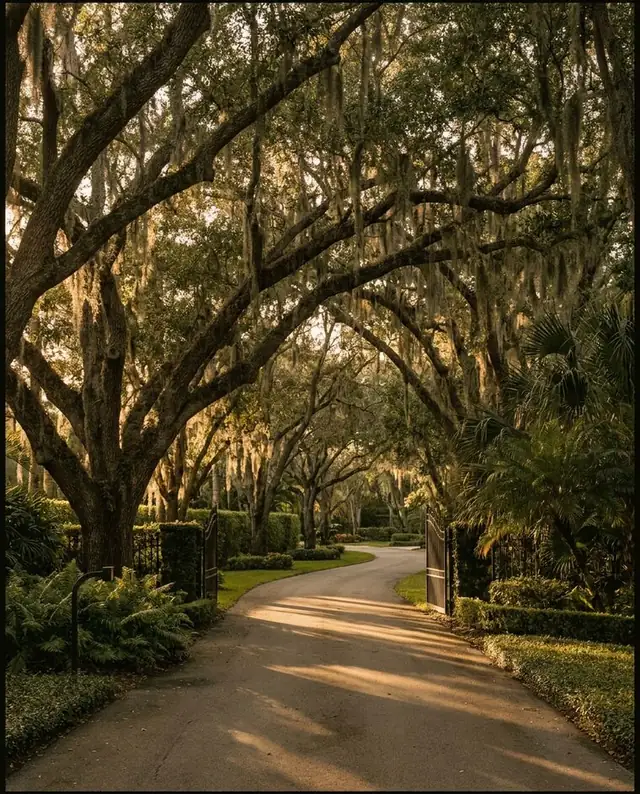
Pinecrest is a 7.5-square-mile village of acre lots, canopy streets and mid-century ranch houses steadily giving way to larger new ones, eleven miles southwest of downtown Miami with US 1 as its western edge.
Updated October 2026
Buying in Pinecrest means buying land first and a house second. Most of the village was platted in the 1950s and 1960s as ranch homes on acre lots, and many of those lots now carry two-story new builds. Prices are among the highest in south Miami-Dade; the village's own site lists an average home value above two million dollars. Expect a car commute, US 1 traffic at the edge, and a tear-down question on older homes.
- County
- Miami-Dade
- ZIP codes
- 33156
- Population
- 18,388 (2020)
- Incorporated
- 1996
- Area
- 7.54 sq mi
Mostly detached houses on one-acre lots platted in the 1950s and 1960s, with mid-century ranches steadily replaced by two-story new builds. Townhomes and condos are limited to a thin band near US 1. Few mandatory associations.
Redfin, Pinecrest housing market · source
Active inventory
Houses for sale in Pinecrest
We send the full Pinecrest list — every active listing, with the flood zone and association notes — the same day you ask.
That means the whole active list for Pinecrest — not the filtered slice a national portal decides to show you, and not the three homes an advertising budget pushed to the top of the page. Every address comes back with the things that actually decide whether a property is worth your Saturday: the FEMA flood zone it sits in, the association's real picture, and the county permit history behind the walls.
- The complete active list Every property on the market in Pinecrest, in one place, in one email.
- Flood zone, address by address The FEMA zone each property sits in — before you fall for the kitchen.
- The association picture Dues, reserves, special assessments on the books, and 40-year recertification status.
- County permit history What was permitted, what was closed out, and what was never pulled at all.
There is no live MLS search on this site — no search box, no map full of pins, and nothing that quietly serves you last month's prices and homes that went under contract weeks ago. A ClearPath agent pulls the list by hand instead. You name the area, a person goes and gets what is genuinely on the market, reads it before it leaves, and sends it to you. Then that same person answers whatever you want to ask about any address on it, which is the part a search box was never able to do anyway.
No portal account. No login. Your details are not sold on to anyone — the list comes from the brokerage that would represent you, and you can ask about any address on it.
Start here
Get the Pinecrest list
Name, number, email. That is the whole ask — the list comes back from ClearPath directly.
Thank you. ClearPath will be in touch shortly.
Rather talk it through? Call or text 786 · 797 · 6400
Living in Pinecrest: who lives here and what the housing looks like
Pinecrest sits on the coastal ridge south of Coral Gables and east of Kendall, with US 1 (South Dixie Highway) as its western border and Red Road (SW 57th Avenue) along its east side. The village covers 7.54 square miles, 7.45 of them land, and counted 18,388 residents in the 2020 census, roughly eleven miles southwest of downtown Miami.
Two founding stories: in the early 1900s Henry Flagler used a property at US 1 and SW 102nd Street as a staging yard for the Overseas Railroad, and in 1936 Franz and Louise Scherr opened Parrot Jungle on twenty acres at Red Road and SW 111th Street. The 1950s and 1960s brought the ranch houses on acre lots that still define the grid. Hurricane Andrew crossed the area in August 1992; incorporation followed on March 12, 1996, with Evelyn Langlieb Greer as first mayor. Pinecrest now runs on a council-manager charter from 12645 Pinecrest Parkway and counts 50,837 street trees.
“Disclosing all known facts that materially affect the value of residential real property and are not readily observable to the buyer”
Housing stock
The original stock is the mid-century ranch on a one-acre lot, often with a pool added later and a roof replaced at least twice. Over the last twenty-five years many of those houses were torn down for two-story new builds, so one block can show a 1958 ranch, a 1990s Mediterranean and a 2022 flat-roof house side by side. Smaller lots exist along the eastern and northern edges, and a thin band of townhomes and condos runs near US 1, but the village is overwhelmingly detached houses on large parcels.
That land pattern drives the numbers. The village website lists an average home market value of $2,171,874, and lots with the right dimensions trade as building sites regardless of what stands on them. New construction is custom, one house at a time, permitted through the village's own building department. There are no large planned subdivisions and few mandatory associations.
Getting around
Pinecrest is a driving village with one exception: the Metrorail. The Dadeland North and Dadeland South stations sit at the village's northwest corner along US 1, which puts a rail ride to Brickell and downtown within reach of the northern streets. US 1 carries most of the traffic and retail; the interior grid from SW 104th to SW 136th Street is quiet and, in many stretches, without sidewalks.
By road, downtown Miami is about eleven miles northeast and Miami International Airport about thirteen miles by way of the Palmetto Expressway (SR 826), whose southern end is the Dadeland interchange. Kendall Drive and Old Cutler Road frame the village on the north and east. For short hops the village runs the Pinecrest People Mover and a Freebee on-demand service. Homes near US 1 trade some quiet for transit and shopping; the deep interior trades the reverse.
| Downtown Miami / Brickell | 11 mi | |
|---|---|---|
| Miami International Airport | 13 mi |
Daily life: parks, shopping, hospitals
Pinecrest Gardens is the center of village life. The 20-acre park at 11000 Red Road occupies the original Parrot Jungle grounds, bought by the village in 2002 and reopened as a municipal park on March 8, 2003; it joined the National Register of Historic Places on October 17, 2011 as the Parrot Jungle Historic District. It keeps the original mosaic pathways, a farmers market and the Banyan Bowl, a geodesic-dome amphitheater from the early 1940s with about 530 seats. The other municipal parks are Evelyn Greer Park (10 acres), Suniland Park (10 acres), Coral Pine Park (9 acres), Veterans Wayside Park (4.5 acres) and Flagler Grove Park (3 acres), plus the Miami-Dade Public Library Pinecrest Branch.
Shopping runs along US 1, from the Suniland strip in the south to Dadeland Mall at the north end, which opened on October 1, 1962 and now holds roughly 1.5 million square feet of retail beside the Dadeland North station. For hospitals, Baptist Hospital of Miami, founded in 1960 with 948 beds, sits a short distance northwest of the village.
Schools and services
Public schools are run by Miami-Dade County Public Schools. The feeder pattern runs through Pinecrest Elementary (opened 1954) and Palmetto Elementary, then Palmetto Middle, then Miami Palmetto High at 7431 SW 120th Street, which opened in September 1958, is a neighborhood rather than magnet school, and enrolled 2,672 students in 2023-24. Its zone also takes in Palmetto Bay and parts of Kendall, so the boundary line matters when you compare two listings.
Private options inside the village include the Gulliver Prep Upper School campus; Gulliver reports more than 2,200 students across two campuses. Magnets elsewhere in the district, such as Coral Reef High in Richmond Heights, admit by application rather than address. The village runs its own police, building, planning and public works departments and handles its own permitting, with tree protection and drainage standards enforced on every site plan.
- Pinecrest Elementary SchoolElementary
- Palmetto Elementary SchoolElementary
- Palmetto Middle SchoolMiddle
- Miami Palmetto Senior High SchoolHigh school
- Coral Reef Senior High SchoolMagnet
- Gulliver Prep Upper SchoolPrivate
Buying in Pinecrest: what to check
Start with the lot, not the kitchen. Confirm the survey, the setbacks and which trees are protected, because a Pinecrest property's value is tied to what the parcel allows. If the house is a 1950s or 1960s original, treat the roof, the electrical panel, cast-iron drain lines and the septic-versus-sewer question as inspection priorities; many interior streets are still on septic.
Flood zone next. Pinecrest participates in FEMA's Community Rating System and publishes a GIS flood zone viewer with elevation certificates; use it, then run the address through our flood tool. The village's flood brochure describes finished floors at the federal flood elevation plus one foot for new construction, which affects any tear-down plan. Finally, price insurance and taxes from your purchase price: the homestead exemption and Save Our Homes cap reset at sale.
Selling in Pinecrest
Buyers here fall into two camps, and your pricing should know which one it is talking to. Builders and end-users who want a site care about lot dimensions, tree cover, frontage and whether the house can be demolished without a fight; for them an updated kitchen adds little. Buyers who want a finished home care about the roof date, impact windows, a permitted pool and a clean permit history with the village.
Documentation sells. Have the survey, the elevation certificate, the roof permit, the septic or sewer status and any tree-removal permits ready before the listing goes live; in a market where many homes have been rebuilt, an original house without a paper trail gets priced as land. Spring sees the most out-of-state interest, and photography that shows the full parcel and canopy does more than interior staging.
Before you offer in Pinecrest: the checklist
- Verify lot dimensions, setbacks and protected trees before you value the house; the parcel is the asset.
- Ask whether the street is on septic or sewer and inspect cast-iron drain lines on pre-1980 homes.
- Pull the village permit history; unpermitted additions are common on rebuilt mid-century houses.
- Run the flood zone and request the elevation certificate from the village's viewer.
- Budget taxes and insurance from your own purchase price, not the seller's homesteaded bill.
Before you list in Pinecrest: what works
- Decide early whether you are selling a house or a building site; the marketing is different.
- Gather survey, elevation certificate, roof permit and tree permits before listing.
- Photograph the full parcel and canopy; the lot is what buyers compare.
- Spring listings meet the most out-of-state interest in this part of the county.
Is Pinecrest a good place to live? Questions people ask
Is Pinecrest a good place to buy a house?
If you want land and canopy inside Miami-Dade, yes. The village is mostly one-acre lots, has its own police and parks, and sits next to the Dadeland Metrorail stations. The trade-offs are price, among the highest in south Dade, and the upkeep of a large lot. Older homes often need roof, plumbing and septic attention.
Is Pinecrest in a flood zone?
Parts are, mostly near the canals; much of the interior ridge is not. The village participates in FEMA's Community Rating System and publishes a GIS flood zone viewer with elevation certificates. Zones change block by block, so check the specific address with our free tool and get an insurance quote during your inspection period.
What schools serve Pinecrest?
Miami-Dade County Public Schools assigns most of the village to Pinecrest Elementary or Palmetto Elementary, then Palmetto Middle and Miami Palmetto High, which opened in 1958. Gulliver Prep's Upper School is inside the village. Magnets such as Coral Reef High admit by application, not address. Confirm the zone for any specific listing.
Are there HOAs in Pinecrest?
Rarely. Pinecrest was platted as individual acre lots in the 1950s and 1960s rather than as planned subdivisions, so most houses have no mandatory association. A few townhome and condo pockets near US 1 do. What replaces the HOA is the village itself: tree protection, setbacks and permitting are enforced by Pinecrest's own departments.
How far is Pinecrest from downtown Miami and the airport?
About eleven miles to downtown and about thirteen miles to Miami International Airport by road, using the Palmetto Expressway from the Dadeland interchange. The Dadeland North and Dadeland South Metrorail stations at the village's northwest corner offer a rail alternative to Brickell and downtown. Drive times vary widely with US 1 traffic.
Can I tear down an older house in Pinecrest and build new?
Usually, subject to the village's setbacks, lot coverage, tree-protection rules and flood elevation requirements; the village's flood brochure describes finished floors at the federal flood elevation plus one foot. Permits run through Pinecrest's own building department. Have an architect confirm what the parcel allows before you price it as a building site.
Talk to a Pinecrest realtor
Budget, bedrooms, timeline. We send the current list and a straight read on the area within the day.
Or book a call