

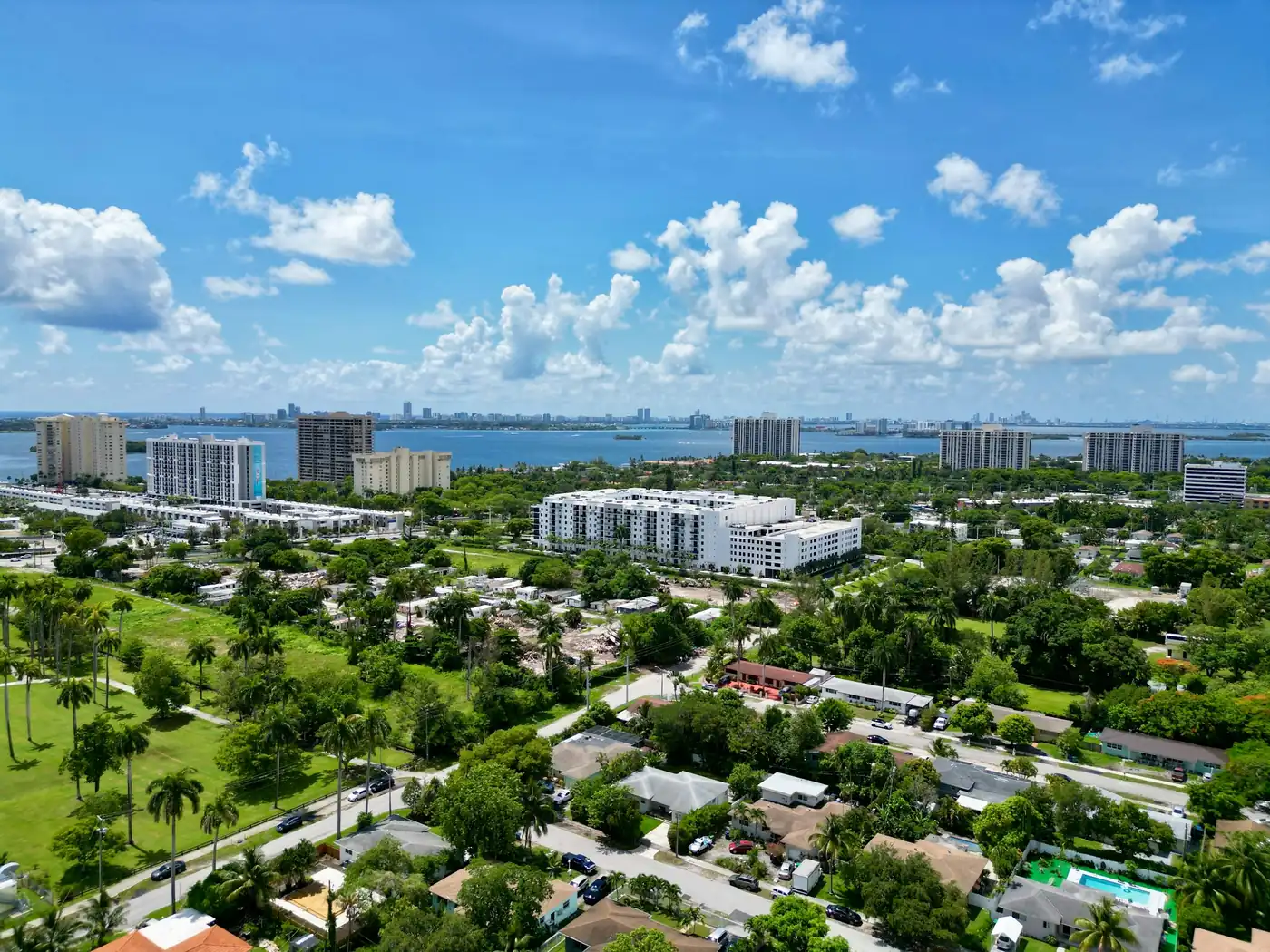
“SFHA are defined as the area that will be inundated by the flood event having a 1-percent chance of being equaled or exceeded in any given year.”
The short answer: moving to Miami costs more than the no-income-tax headline suggests and less than the luxury headlines imply. Budget for property tax near 1.7–2.2% of your purchase price, insurance priced on the roof and the flood zone, and — if you buy a condo — association dues that can reach four figures a month. Pick the neighborhood by commute, housing type, price band and flood map, in that order, and Miami is a very good place to live.
Why do people move to Miami?
The headline reasons are real: no state income tax in Florida, a year-round outdoor life, a genuinely international business and cultural scene, and direct flights to almost everywhere. For remote workers and relocating executives alike, the math on the income-tax line alone can be five figures a year.
But Miami rewards people who choose deliberately. The difference between a high-rise in Brickell and an acre in Pinecrest is not a matter of budget alone — it is a matter of how you want to live, how far you will drive, and what you are willing to insure.
How much does it cost to live in Miami?
Florida has no state income tax, and that is a meaningful, permanent advantage — especially if you are relocating from a high-tax state. Be clear-eyed about what replaces it. Miami’s costs show up in four lines that do not exist, or are much smaller, in most of the country:
| Cost line | What to expect in Miami-Dade | How to check it before you buy |
|---|---|---|
| Property tax | About 1.7–2.2% of the purchase price per year (county + municipal + school millage), before homestead | Miami-Dade Property Appraiser millage tables; our mortgage calculator |
| Homeowners (wind) insurance | Priced on roof age, wind mitigation and construction; older roofs can be declined | Permit history; wind-mitigation report (OIR-B1-1802); a bound quote |
| Flood insurance | $0 in Zone X to four figures a year in AE/VE; required with a federally backed loan in a Special Flood Hazard Area | Flood zone lookup by address; elevation certificate |
| Association dues | $0 for most single-family; roughly $1.50–$2.50 per sq ft per month in newer Brickell towers; $300–$1,500+ in many condos | Budget, reserve study and minutes — before the offer |
Ranges are directional market context for 2026, not quotes. Your numbers depend on the specific address and building.
The practical rule: compare full monthly payments, not prices. Two homes at the same price can be a thousand dollars a month apart once tax, insurance and dues are counted.
Which Miami neighborhood should I live in?
Start from the commute you will actually make at 8 a.m., then the housing type, then the price band, then the flood map — in that order. Most people do it backwards and fall in love with a kitchen before they know the insurance bill.
A quick, honest orientation to the areas ClearPath serves most:
Brickell
Miami’s financial core, vertical and walkable. New-construction condos, water views, restaurants downstairs. Best for professionals who want energy and zero yard work — and who will read the association’s reserve study before they offer. Guide: Brickell condos for sale.
Coral Gables
Mediterranean architecture, banyan-canopied streets, generational estates. Quieter, established, family-oriented, with some of the area’s best schools. Old-money calm minutes from downtown. Guide: Coral Gables homes for sale.
Coconut Grove
A former sailing village that kept its trees and gained modern builds. Bayfront parks, a village feel, and a loyal community. Popular with families who want character over flash — and who check the flood zone, because the bayfront and the ridge are different maps. Guide: Homes for sale in Coconut Grove.
Pinecrest
Space. Acreage, top-rated public schools, large lots under live oaks. The south-Dade choice for families who want room to breathe and are happy to trade a longer commute for it. Guide: Houses for sale in Pinecrest.
Doral, Kendall and the west
Newer, gated, planned — and the practical base for anyone who commutes to the airport or the western business corridor. Lower entry prices than the coast; more association rules. Guides: Doral, Kendall, Miami Lakes.
Homestead, Cutler Bay and the south
Where the numbers close for first-time buyers: FHA-eligible prices and newer construction. The trade is the drive and, on the bay side, the flood map. Guides: Homestead, Cutler Bay, Palmetto Bay.
How do property taxes and the homestead exemption work?
Property taxes in Miami-Dade typically run about 1.7–2.2% of the purchase price per year, depending on the municipality’s total millage. If the home is your primary residence, Florida’s homestead exemption reduces your taxable value and — more importantly — starts the Save Our Homes cap that limits how fast your assessment can rise each year.
One thing that surprises newcomers: the seller’s tax bill is not the bill you will pay. Assessed values reset to the sale price the year after you close, so always budget from your own purchase price, not the prior owner’s taxes. File for homestead by March 1 of the year after you buy. Full walk-through: Florida homestead exemption: how to file, Save Our Homes and portability.
Which Miami neighborhoods flood, and what does it cost?
This is the section most guides skip. In Miami, the flood zone is not a detail — it is a cost driver and often a lender requirement. A home in a Special Flood Hazard Area (the A and V zones on the FEMA map) generally needs flood insurance with a federally backed mortgage, and the premium depends on the elevation certificate as much as the zone.
The good news: a great many desirable Miami homes sit in Zone X, where flood insurance is optional and inexpensive. Flood maps follow elevation and drainage, not streets, so two homes on one block can be in different zones. The only way to know is to check the specific address.
What are the schools like?
Miami-Dade County Public Schools is one of the largest districts in the country, with several nationally ranked magnet and public high schools, plus a deep bench of private and preparatory options. School quality varies block by block, which is why every neighborhood guide lists the public, magnet and charter schools that actually serve that area — names only, so you can research them yourself.
How does buying a home in Miami actually work?
Florida uses “as-is” contracts as the norm, with inspection and financing contingencies that protect you when used well. A typical path:
- Get pre-approved first. In a cash-heavy market, sellers take pre-approved buyers seriously. Try our affordability calculator to frame the conversation, then talk to a lender — and read what a pre-approval actually requires.
- Sign the buyer-representation agreement. Since August 17, 2024 it is required before an agent tours a home with you, and compensation is negotiable. How buyer agents are paid now.
- Tour with a strategy, not just a wish list — flood zone, roof age, association health and insurance cost matter as much as the kitchen.
- Make a clean, well-structured offer. Terms often win over price alone here. The Florida as-is contract, explained.
- Inspect, appraise, and close. Closing costs run about 2–4% of the price for a financed buyer; who pays what in Florida.
Moving to Miami from another country?
Miami closes purchases for foreign-national and ITIN buyers every week, but the paperwork — not the price — sets the timeline. US lenders read US credit and US-documented income; start building both before the move where you can. Read ITIN loans in Florida and moving to Miami from Puerto Rico, Colombia, Venezuela or Cuba. Every page on this site is also in Spanish.
Frequently asked
What is the cost of living in Florida, and is Miami higher?
Florida has no state income tax, which is the biggest single line most newcomers save. Miami-Dade gives some of that back in housing, insurance and association costs: a typical single-family home carries property tax near 1.7–2.2% of its price per year, homeowners insurance priced on the roof and wind mitigation, flood insurance if the address sits in a Special Flood Hazard Area, and — in condos — monthly dues that routinely reach four figures. Run one real address through our mortgage calculator and you will have your own number in five minutes.
Is Miami a good place to live?
For people who choose deliberately, yes: year-round outdoor life, an international business and cultural scene, direct flights almost everywhere, and no state income tax. The people who regret it usually chose a neighborhood by its name and a home by its kitchen, then met the insurance bill and the commute. This guide is the antidote.
Which is the best neighborhood in Miami to move to?
The one that survives four checks in this order: your actual commute at 8 a.m., the housing type you want (house, townhome, condo), the price band for that type, and the FEMA flood zone of the specific address. Families lean toward Pinecrest, Palmetto Bay and Miami Lakes; walkable-city buyers toward Brickell and Coconut Grove; value buyers toward Homestead, Hialeah Gardens and Cutler Bay. Each of our 28 guides shows its numbers.
What are property taxes in Miami-Dade?
Roughly 1.7–2.2% of the purchase price per year depending on the municipality's total millage, before the homestead exemption. The seller's bill is not your bill: the assessed value resets to the sale price the year after you close. File for homestead by March 1 to start your own Save Our Homes cap.
Do I need a realtor to buy a house in Miami?
Not by law, but Florida is an as-is, cash-heavy market with flood zones, condo recertifications and 30-day closings. Since August 17, 2024 buyer representation is put in writing before the first tour, and a licensed agent owes you the duties in Florida Statute 475.278 — including disclosing every known fact that materially affects value and is not readily observable.
How much money do you need to move to Miami and buy?
Down payment (3.5% with FHA, 3–5% on many conventional loans, 20% to avoid mortgage insurance) plus closing costs that typically run 2–4% of the price for a financed buyer in Miami-Dade, plus the first year of insurance and, in a condo, the association's move-in fees. Our affordability tool works backwards from your monthly budget with Miami-Dade tax and insurance assumptions.