

“The course or courses required for one to become initially licensed shall not exceed a total of 63 classroom hours of 50 minutes each, inclusive of examination, for a sales associate”
The short answer: be 18 with a high-school diploma, hold a U.S. Social Security number, complete a Florida-approved 63-hour pre-license course, apply to the DBPR, submit Livescan fingerprints, pass a 100-question exam with 75 points or more at a Pearson VUE center, and activate the license under a registered broker. Then finish a 45-hour post-license course before your first renewal or the license is void. The calendar is mostly the course pace.
What are the requirements to become a real estate agent in Florida?
Florida sets them in statute and the DBPR restates them on the Sales Associate Initial Application checklist. Verbatim from the checklist, the applicant must:
- Age: “Must be at least 18 years of age.”
- Education: “Must hold a high school diploma or its equivalent.”
- Social Security number: “You must have a United States Social Security number to apply.”
- Character: the statute adds that an applicant must “be honest, truthful, trustworthy, and of good character” (F.S. 475.17(1)(a)); the fingerprint background check is how the state tests it.
There is no citizenship requirement on the checklist and no college requirement. A four-year degree or higher in real estate may exempt you from the pre-license course, subject to the DBPR reviewing a certified transcript.
How long is real estate school in Florida?
Sixty-three hours, by law. The statute caps the sales associate pre-license course at 63 classroom hours of 50 minutes each, exam included, and the DBPR checklist requires “proof of course completion of Florida approved 63 hour pre-license education for sales associates” before you sit the state exam. Two details from the checklist that trip people up: the course completion “is good for two (2) years from the date of completion,” and “the course is not required at the time of application submission” — you may apply to the DBPR for exam approval before you finish the course.
Schools set their own prices and formats. Online self-paced courses fit around a job; classroom formats compress the same hours into consecutive days. The end-of-course exam is part of the 63 hours.
How do you apply and get fingerprinted?
- Apply to the DBPR online through its portal or on the printable RE 1 application, and pay the fee “as provided in the application.” (The checklist does not print the amount; the application does.)
- Submit fingerprints immediately after applying, through a Livescan service provider registered with the FDLE. The DBPR notes that the FDLE “requires that an application for licensure should precede the submission of your fingerprints,” and that results can take up to five days to reach the Department.
- Wait for DBPR approval of your application. Once approved, you are eligible to schedule the exam.
How hard is the Florida real estate exam?
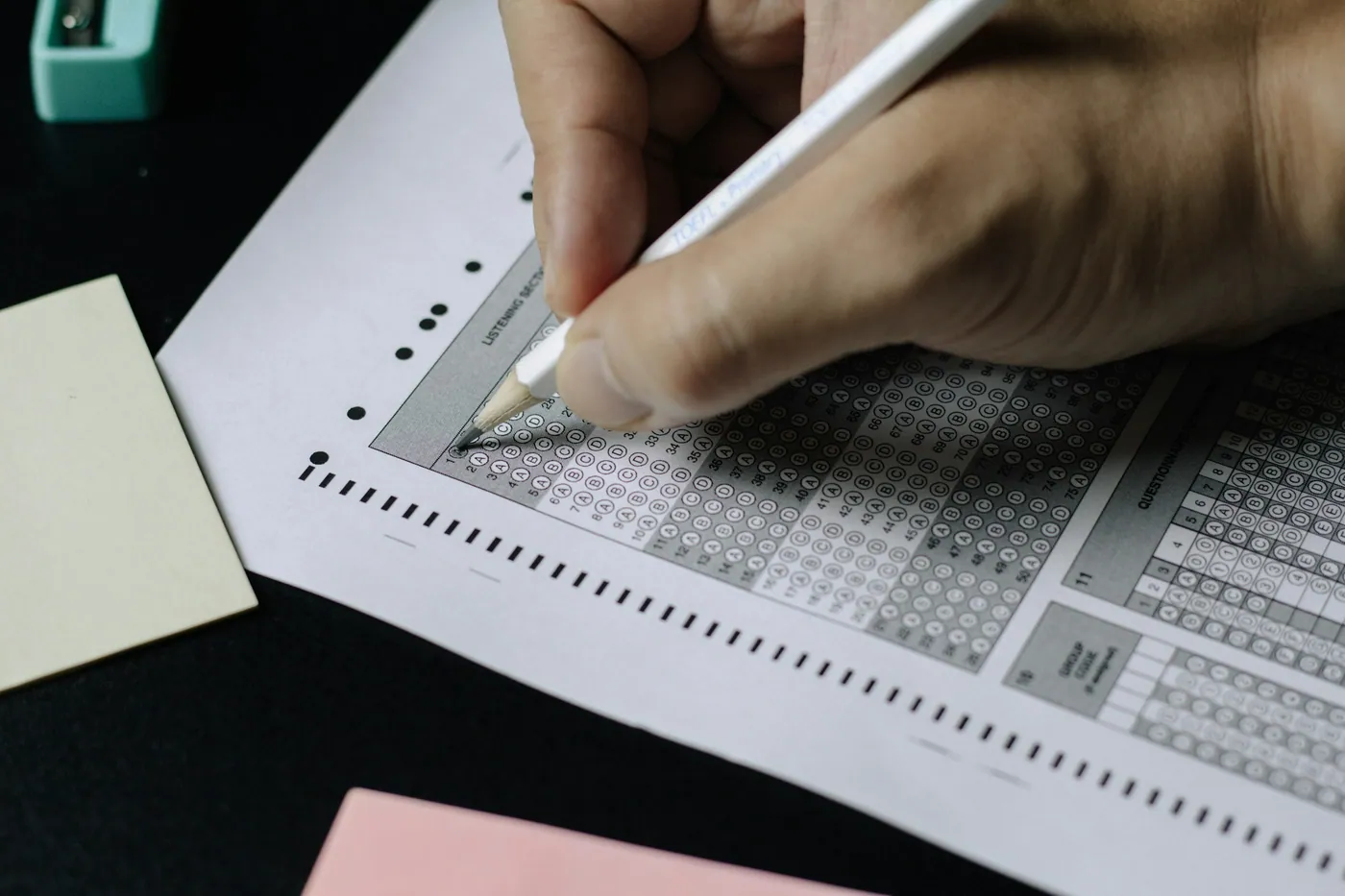
The DBPR’s Candidate Information Booklet, effective January 2025, is specific: “The examination consists of one hundred multiple choice questions. Candidates are given a total of three and a half hours to complete the examination.” It covers nineteen content areas drawn from Chapter 475, Part I, Florida Statutes, and Chapter 61J2, Florida Administrative Code — real estate principles and practices, real estate law, and real estate math.
Scoring is equally weighted: “The Sales Associate examination shall be graded based on 100 points for a perfect examination. A candidate who receives a grade of 75 points or higher will have successfully passed the examination.” You get an official, photo-bearing result report at the test center. If you fail, you must wait 24 hours to schedule a retake. Pearson VUE lists the Real Estate Salesperson exam at $36.75 and three and a half hours on its Florida candidate fact sheet; all Florida DBPR exams are taken in a physical test center.
The 75-point pass mark, the question count and the time are from the DBPR booklet; the exam fee is from Pearson VUE's fact sheet (a 2017 revision still linked from its Florida page as of February 2026). Confirm the fee when you reserve.
How much does it cost to get a Florida real estate license?
| Item | Who sets it | What the source says |
|---|---|---|
| 63-hour pre-license course | The school | Priced by the provider; the DBPR lists approved providers |
| DBPR application fee | DBPR | “Pay the required fee as provided in the application” — amount printed in the application, not on the checklist |
| State exam | Pearson VUE | $36.75, 3½ hours (Florida candidate fact sheet) |
| Livescan fingerprints | The FDLE-registered provider | Priced by the provider |
| Post-license course (before first renewal) | The school | Up to 45 classroom hours (F.S. 475.17(3)(a)) |
| Association and MLS dues (optional, if you join a REALTOR® board) | MIAMI REALTORS® / the MLS | Paid to them, not to the brokerage |
Military veterans, their spouses and Florida National Guard members may be eligible for DBPR fee waivers, reimbursements or discounts.
How long does it take to get a real estate license in Florida?
Add the pieces: the course (weeks, at your pace), the DBPR application and fingerprint results (days), and the exam, which Pearson VUE lets you schedule up to one calendar day before the date you want, subject to availability. The course pace is the variable; the rest is days. The two-year validity of the course completion is the outer limit.
What happens after you pass: activation under a broker
A passed exam does not make you an agent. Florida law says a sales associate may not operate “for any person not registered as her or his employer” (F.S. 475.42(1)(b)), so the license sits inactive until a broker registers it with the DBPR. That is the moment the brokerage choice matters: the split, the fees, who follows up with your leads and who mentors you are decided by that registration, not by the exam. Read the new-agent brokerage comparison and the commission page before you pass, and bring the independent-contractor agreement to someone who will read it with you.
What is the 45-hour post-license course?
A second course, required once, before your first license renewal. The statute allows the Florida Real Estate Commission to prescribe a post-licensure requirement of up to 45 classroom hours, and it is unambiguous about the consequence of skipping it: “The license of any sales associate who does not complete the postlicensure education requirement prior to the first renewal following initial licensure shall be considered null and void.” Book it in your first month. After that first renewal, continuing education applies at every renewal under the rules the DBPR publishes.
Which license: sales associate or broker?
Everyone starts as a sales associate. The broker license — 72 classroom hours of pre-license education plus experience and a separate exam — is what lets you run a brokerage and register other agents. Read real estate broker vs real estate agent for what each one permits, and how much real estate agents make in Florida for the income data behind the decision.
Frequently asked
How long does it take to get real estate license?
In Florida: the 63-hour pre-license course (self-paced online, or classroom days back to back), DBPR application approval, fingerprints (results reach the Department in up to five days), then the exam at a Pearson VUE center, which can be scheduled up to one calendar day before you want to test. The calendar is mostly the course pace: weeks if you study daily, longer if you do not. The course completion is valid for two years.
How much does it cost to get real estate license?
Four items: the pre-license course (priced by the school), the DBPR application fee (set in the application on the DBPR portal — the checklist itself does not print an amount), the state exam at $36.75 per Pearson VUE's Florida candidate fact sheet, and Livescan fingerprinting through an FDLE-registered provider. After licensing add association and MLS dues if you join a REALTOR® board, and the 45-hour post-license course before your first renewal.
How hard is getting a real estate license?
The exam is 100 multiple-choice questions in three and a half hours, graded on 100 points, and 75 or higher passes. It covers nineteen content areas — real estate law, principles and practices, and math — from Chapter 475 and Rule 61J2. Candidates who fail may schedule a retake after 24 hours. The course is the preparation; the math and the law questions are where most people lose points.
How long is real estate school?
The Florida sales associate pre-license course may not exceed 63 classroom hours of 50 minutes each, exam included (F.S. 475.17(2)(a)1). Course completion is good for two years. A four-year degree or higher in real estate may exempt you from the course; the DBPR reviews a certified transcript.
How many questions are on the real estate exam?
One hundred multiple-choice questions, three and a half hours, per the DBPR Candidate Information Booklet (effective January 2025). A grade of 75 points or higher passes. You receive an official, photo-bearing result report at the test center.
How to become a real estate broker?
After the sales associate license: meet the experience requirement, complete the broker pre-license course — capped at 72 classroom hours (F.S. 475.17(2)(a)1) — and pass the broker exam. The broker-vs-agent guide explains what each license lets you do.
- DBPR — Sales Associate Initial Application (RE 1) checklist
- DBPR — Candidate Information Booklet, Real Estate Sales Associate Examination (effective January 2025)
- Pearson VUE — Florida real estate candidate fact sheet (exam fee and time)
- Florida Statutes §475.17 — qualifications for practice
- Florida Statutes §475.42 — violations and penalties