

Miami Shores Homes for Sale & Neighborhood Guide
Miami Shores is a 2.5-square-mile village on Biscayne Bay, incorporated in 1932 and laid out in the 1920s as "America's Mediterranean," with its own golf course, library, aquatic center and charter school.
Updated October 2026
Buying in Miami Shores means buying a detached house on a village street, most built between the 1920s and the 1960s, from Mediterranean Revival originals near NE 2nd Avenue to mid-century ranches toward the bay. Downtown Miami is about 6.6 road miles south. The village runs its own services and has no condo towers. The caveats are older construction, insurance costs and AE and VE flood zones near the bay and canals.
- County
- Miami-Dade
- ZIP codes
- 33138, 33150, 33153, 33161, 33168
- Population
- 11,567 (2020)
- Incorporated
- 1932
- Area
- 3.78 sq mi (2.49 land)
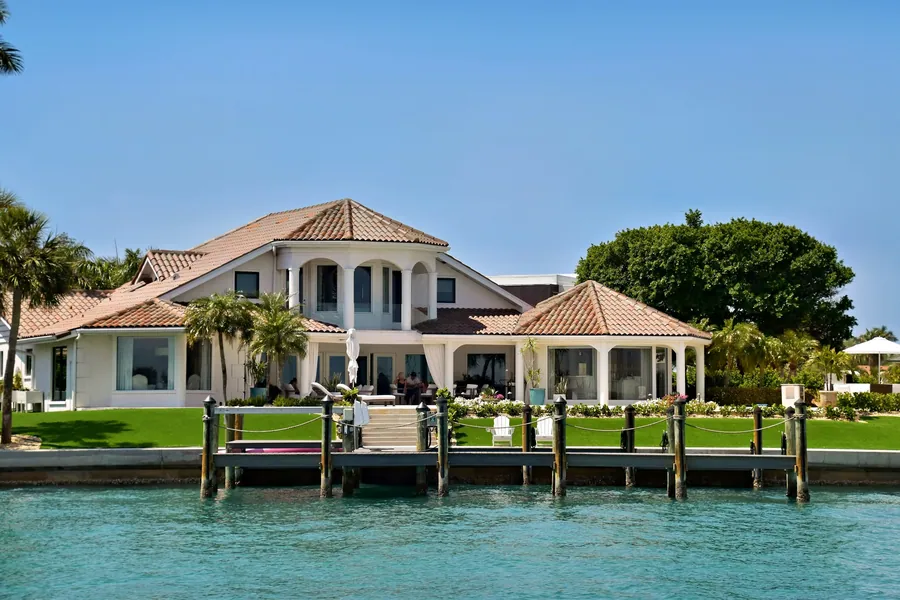
Detached houses only: 1920s Mediterranean Revival originals from the Shoreland plan, 25 of them on the National Register, and postwar ranch and Florida-modern houses toward the bay and canals. No condominium towers.
Redfin, Miami Shores housing market · source
Active inventory
Homes for sale in Miami Shores
We send the full Miami Shores list — every active listing, with the flood zone and association notes — the same day you ask.
That means the whole active list for Miami Shores — not the filtered slice a national portal decides to show you, and not the three homes an advertising budget pushed to the top of the page. Every address comes back with the things that actually decide whether a property is worth your Saturday: the FEMA flood zone it sits in, the association's real picture, and the county permit history behind the walls.
- The complete active list Every property on the market in Miami Shores, in one place, in one email.
- Flood zone, address by address The FEMA zone each property sits in — before you fall for the kitchen.
- The association picture Dues, reserves, special assessments on the books, and 40-year recertification status.
- County permit history What was permitted, what was closed out, and what was never pulled at all.
There is no live MLS search on this site — no search box, no map full of pins, and nothing that quietly serves you last month's prices and homes that went under contract weeks ago. A ClearPath agent pulls the list by hand instead. You name the area, a person goes and gets what is genuinely on the market, reads it before it leaves, and sends it to you. Then that same person answers whatever you want to ask about any address on it, which is the part a search box was never able to do anyway.
No portal account. No login. Your details are not sold on to anyone — the list comes from the brokerage that would represent you, and you can ask about any address on it.
Start here
Get the Miami Shores list
Name, number, email. That is the whole ask — the list comes back from ClearPath directly.
Thank you. ClearPath will be in touch shortly.
Rather talk it through? Call or text 786 · 797 · 6400
Living in Miami Shores: who lives here and what the housing looks like
Miami Shores Village sits in northeastern Miami-Dade County with Biscayne Bay on the east, the City of Miami on the south, El Portal to the southwest, Pinewood to the west and Biscayne Park to the north. It covers 3.78 square miles, 2.49 of them land, at an elevation of about 7 feet. The 2020 Census counted 11,567 residents, up from 10,493 in 2010. Village Hall is at 10050 NE 2nd Avenue.
The area was settled in the early 1870s as Biscayne, when William H. Gleason and William H. Hunt moved up the bay from Miami. In 1924 the Shoreland Company, led by Hugh M. Anderson, bought the Gordon Tract, Bay View Estates and surrounding acreage to build "America's Mediterranean," a master plan with 9,000 building sites, five and two-thirds miles of bay frontage and four miles of inland waterways. The company completed 118 Mediterranean-style homes before the hurricane of September 18, 1926 stopped everything. Bessemer Properties, part of the Phipps family interests, bought the holdings in 1928 through the New Miami Shores Corporation.
The village incorporated on January 2, 1932, with Roy H. Hawkins as principal founder and Frank O. Pruitt as first mayor. It reached 9,000 residents by 1968 and calls itself the Village Beautiful. Twenty-five of the Shoreland-era Mediterranean homes are listed on the National Register of Historic Places, which is why the streets west of Biscayne Boulevard still read as a 1920s plan.
“SFHA are defined as the area that will be inundated by the flood event having a 1-percent chance of being equaled or exceeded in any given year.”
Housing: from Shoreland originals to mid-century ranches
Miami Shores is a village of detached houses. There are no condominium towers, and the housing stock is layered by decade. The oldest layer is the 1920s Shoreland work: Mediterranean Revival houses with barrel tile roofs, arched openings and stucco, concentrated near NE 2nd Avenue, Grand Concourse and the streets around the country club.
The second layer came with the postwar growth that took the village to 9,000 residents by 1968: one-story ranch and Florida-modern houses on the blocks east of Biscayne Boulevard and along the canals, many with larger lots and pools added later. The bayfront and canal-front streets around Bayfront Park on North Bayshore Drive carry the largest lots and the highest exposure to flood zones.
Because so much of the stock is pre-1970, the questions that matter are roof age, electrical and plumbing updates, hurricane protection and permit history for additions. Renovated houses sell alongside originals, and the difference in insurance cost between the two can be large.
Getting around
Biscayne Boulevard, US 1, runs north–south through the village, and NE 2nd Avenue is the local main street with Village Hall, the library and shops. I-95 is the western edge of the area, reached from NE 103rd Street or 125th Street. The Florida East Coast railway corridor cuts through the golf course and marks the line between the older west side and the bayside streets.
Rome2rio puts Downtown Miami at about 6.6 road miles, Miami International Airport at 9.9, Miami Beach at 9.3 across the causeways, Aventura at 8.2 and Doral at 13.2. There is no Metrorail station in the village; most residents drive, and Biscayne Boulevard carries the county bus service.
| Downtown Miami | 6.6 mi | |
|---|---|---|
| Miami International Airport | 9.9 mi | |
| Miami Beach | 9.3 mi | |
| Doral | 13.2 mi | |
| Aventura | 8.2 mi |
Daily life: golf course, library, aquatic center
The Miami Shores Country Club at 10000 Biscayne Boulevard is the village's centerpiece. Crews cleared 130 acres of woodland in early 1939, the Works Progress Administration helped fund it, and the course opened that fall to designs by Robert F. "Red" Lawrence and Louis Wilson. The Biscayne Canal C-8 and the FEC railroad both cross the course, and it is a featured stop on the Florida Historic Golf Trail.
Village facilities cluster along Park Drive: the C. Lawton McCall Community Center at 9617, the Tennis and Pickleball Center at 9701, the athletic fields and Field House at 9825, Constitution Park at 97th Street and the Tot Lot at NE 101st Street. Bayfront Park runs from 94th to 97th streets on North Bayshore Drive, and the Aquatics Complex and dog park are at 10200 Biscayne Boulevard. Brockway Memorial Library, founded in 1949, holds the Miami Shores Archives.
Barry University, founded in 1940 by the Adrian Dominican Sisters as Barry College and a university since November 13, 1981, occupies a campus of 54 buildings inside the village. The nearest hospital is North Shore Medical Center at 1100 NW 95th Street in Miami, a 357-bed facility with emergency care and stroke treatment.
Schools and services
Miami Shores Elementary at 10351 NE 5th Avenue serves pre-kindergarten through fifth grade. Horace Mann Middle is the assigned public middle school, and Miami Edison High School at 6161 NW 5th Court, established in 1930, is the public high school for the area. Confirm assignments by address with Miami-Dade County Public Schools.
Doctors Charter School of Miami Shores at 11301 NW 5th Avenue is a grades 6–12 college-preparatory charter that holds a municipal charter through the village. It opened in 1997 as the Miami Shores/Barry University Charter School on five acres of the Barry campus and took its current name in 2005 when a permanent building replaced the original structures.
Miami Country Day School at 601 NE 107th Street is the private option, founded in 1938 and now a pre-kindergarten through twelfth grade school on 21 acres with about 1,280 students. The village provides its own police, public works, recreation and code compliance; the Code Compliance office also handles flood-zone questions.
- Miami Shores Elementary SchoolElementary
- Horace Mann Middle SchoolMiddle
- Miami Edison Senior High SchoolHigh school
- Doctors Charter School of Miami ShoresCharter
- Miami Country Day SchoolPrivate
Buying in Miami Shores: what to check
Start with the flood map. The village's FEMA maps show zones AE-7 through AE-10, AH-11, VE and V. The area along Biscayne Bay is in the coastal high hazard V zone, where new buildings must be elevated on piles or columns. Inside any Special Flood Hazard Area, a federally backed mortgage requires flood insurance, and the village says such properties carry a 26 percent chance of flooding over a 30-year mortgage. Miami Shores holds a Community Rating System Class 6, which gives eligible policies a 25 percent discount.
Then check the house. Order a four-point inspection and a wind mitigation report on any pre-1980 house; both drive the insurance quote. Ask for the roof permit, the electrical panel date and the permit history for every addition and enclosed porch. For a Shoreland-era house, ask whether it is one of the 25 on the National Register, since that affects what you can change.
There is no HOA in most of the village; the village code is the rulebook. Ask Code Compliance about open violations on the property before closing, and pull the elevation certificate if one exists.
Selling in Miami Shores
Buyers come to Miami Shores for the 1920s plan and the village services, so the listing should name what the house has: the year, the style, the roof date, hurricane protection and whether the lot is on a canal or the bay. A house with a current wind mitigation report and a known flood zone removes two unknowns from the buyer's side.
Pricing follows the street more than the square footage. Bayfront and canal-front lots, Shoreland originals and renovated ranches each trade against their own comparables. Timing matters less than condition: an insurable house with clean permits sells in any month.
Before you offer in Miami Shores: the checklist
- Pull the FEMA zone for the parcel; bayfront and canal lots may sit in VE, V or AE.
- Order a four-point inspection and wind mitigation report on any pre-1980 house.
- Ask whether a Shoreland-era house is one of the 25 on the National Register.
- Check the village Code Compliance office for open violations before closing.
- Get the roof permit date and the permit history for every addition.
Before you list in Miami Shores: what works
- State the year, style, roof date and hurricane protection in the listing.
- Have a current wind mitigation report and the flood zone ready for buyers.
- Price against the same street type: bayfront, canal, Shoreland original or ranch.
- Close out open permits and violations before you list.
Is Miami Shores a good place to live? Questions people ask
Is Miami Shores a good place to buy a house?
If you want a detached house on a 1920s village plan with its own golf course, library and aquatic center, and you are willing to own older construction, it fits. There are no condo towers. The work is in the inspection and the flood map, because much of the stock predates 1970 and the bayfront sits in coastal high hazard zones.
Is Miami Shores in a flood zone?
Parts of it are. The village's FEMA maps include zones AE-7 through AE-10, AH-11, VE and V, and the strip along Biscayne Bay is in the coastal high hazard V zone. Other streets sit outside the high-risk areas. Check the exact address with our flood zone tool; the village's Class 6 CRS rating gives eligible policies a 25 percent discount.
When was Miami Shores founded?
The village incorporated on January 2, 1932, but the area was settled in the early 1870s as Biscayne and platted in 1924 by the Shoreland Company as "America's Mediterranean." The 1926 hurricane halted that plan; Bessemer Properties bought the holdings in 1928, and the country club followed in 1939.
Which schools serve Miami Shores?
Miami Shores Elementary at 10351 NE 5th Avenue, Horace Mann Middle and Miami Edison High School are the public assignments; Doctors Charter School of Miami Shores is a grades 6–12 charter with a municipal charter through the village; Miami Country Day School is the private PK–12 option. Barry University is inside the village.
How far is Miami Shores from downtown Miami?
About 6.6 road miles, according to Rome2rio, with Biscayne Boulevard and I-95 as the main routes. Miami International Airport is about 9.9 miles, Miami Beach about 9.3, Aventura about 8.2 and Doral about 13.2. There is no Metrorail station in the village.
Does Miami Shores have an HOA?
Most of the village does not. The village code, enforced by the Code Compliance office, is the rulebook for fences, roofs, additions and property upkeep, and it applies to every lot. Before closing, ask the office about open violations and pull the permit history for the house.
Talk to a Miami Shores realtor
Budget, bedrooms, timeline. We send the current list and a straight read on the area within the day.
Or book a call